How to Add Bots to a Discord Server
If you want to add a Discord bot in 2026, the safest move is still the simple one: use the bot’s official invite link, make sure you have permission to add apps to the server, and don’t give Administrator unless you truly need it. I’ll show you the easy method, the manual OAuth2 URL method, where to find bots without getting baited by sketchy links, and the mistakes that waste time.
One late night, I was helping someone re-add a moderation bot they’d accidentally removed during a role cleanup. It was already past midnight, Discord had changed half the labels again, and the guide they were following kept sending them to pages that looked like they were preserved in formaldehyde from 2018. That’s the real problem here. Adding a bot is easy, old bot tutorials are the part that breaks your brain.
So let me save you some irritation. If you want to add a bot today, use the bot’s official website or a trusted listing, approve it from a server where you have the right permissions, and read the permissions screen like you actually care what you’re clicking.
What Discord is now
Discord started as a gamer chat app. That part is ancient history now. People use it for study groups, creator communities, startup teams, private friend servers, customer support, fandom stuff, and random niche communities that somehow have better moderation than big social apps.
If you’re new, think of it like a mix of chat rooms, voice channels, and community spaces, all stuffed into one app. Sometimes organized. Sometimes pure chaos.
What a Discord bot actually does
A Discord bot is an app account that joins your server and handles jobs automatically. Moderation, welcome messages, role assignment, reminders, logging, music, polls, reaction roles, support tickets, all that stuff. Some bots are genuinely useful. Some are just clutter with a cute avatar.
I used to think adding more bots made a server feel more “complete.” I don’t anymore. Most servers only need two or three good bots. After that, you start collecting overlap, messy permissions, and random slash commands nobody remembers.
- Moderation and anti-spam
- Welcome flows and auto roles
- Music and voice tools
- Polls, reminders, tickets
- Reaction roles and utility commands
Before you add a bot
Do one thing first. Check whether you can actually add apps to that server.
In practice, that usually means you own the server or you have the right role permissions to manage it. Discord’s wording shifts over time depending on desktop, mobile, and whatever interface update landed this month, but the idea hasn’t changed. You need the right server management or app-related permissions, or the invite flow will stop halfway and waste your time.
Also, don’t pull bot invites from random blogs, copied mirrors, or mystery “top tools” pages. Carbonitex shows up in old guides, but it’s not what I’d point anyone to now. Go with the bot’s official site first. If you’re discovering bots, top.gg is still one of the better-known directories, but even there, I’d still double-check the bot’s own website, docs, support server, and whether the project looks alive.
The easiest way to add a bot to Discord
This is the method I’d tell almost anyone to use. Find the bot, open its official invite page, pick your server, review the permissions, and authorize it. Done.
- Open the bot’s official website or trusted listing page.
- Click Invite, Add to Discord, or a similar button.
- Log in to Discord if needed.
- Select the server where you want the bot.
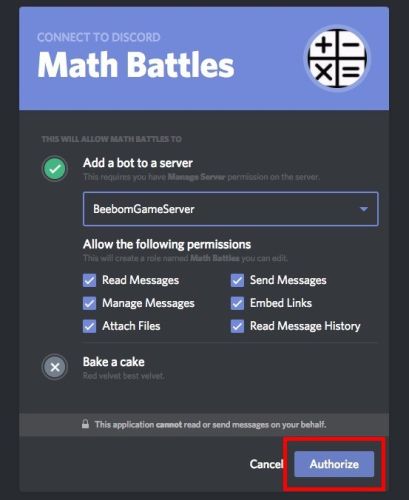
- Review the permissions it requests.
- Click Authorize.
- Complete the CAPTCHA if Discord asks for it.
- Go back to your server and confirm the bot joined.
If the bot doesn’t appear instantly, refresh the app. Sometimes it joins right away. Sometimes it behaves like it needs a small emotional break first.
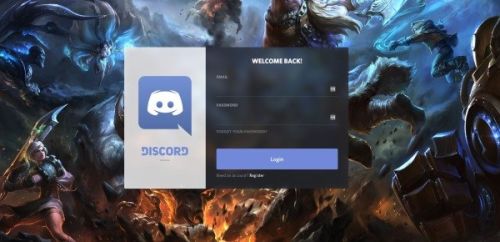
Discord usually asks you to log in before you can approve a bot invite.
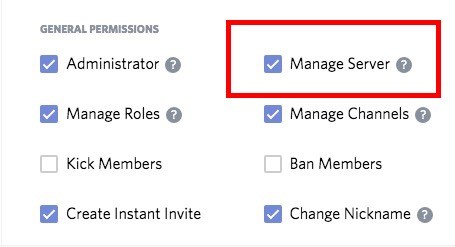
If you don’t have the right server permissions, the bot invite flow can fail midway.
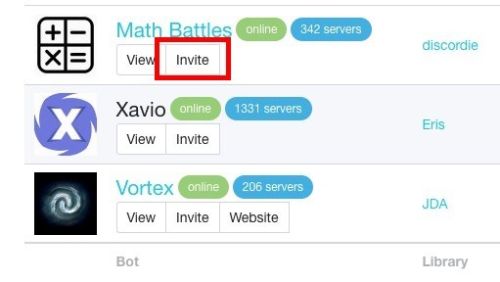
Most active bots still use a simple invite flow from their website or listing page.
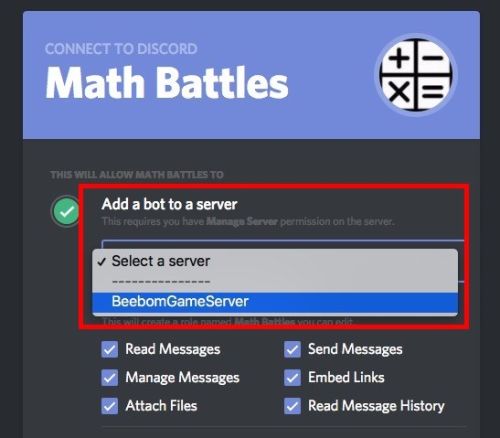
Pick the correct server, then actually read the permission request before clicking authorize.
Once approved, the bot should show up in your server and be ready for setup.
Where to find safe Discord bots in 2026
This is where a lot of people get lazy, and that’s how they end up inviting junk. The safest source is still the bot’s official website. After that, a known directory can help you discover options, but discovery and trust are not the same thing.
| Source | Good for | What to watch for |
|---|---|---|
| Official bot website | Current invite links, setup docs, support links | Double-check the domain so you don’t land on a copycat page |
| top.gg | Finding popular or niche bots, reading public feedback | Votes and rankings can be gamed, popularity is not trust |
| GitHub | Open-source bots, self-hosted projects, developer tools | Some repos are abandoned, setup can be technical |
| Random blog or mirror site | Usually nothing useful | Fake links, stale bots, weird permission requests |
Best for: Anyone adding a public bot to a normal server without wanting extra drama.
Skip if: You’re specifically trying to self-host a bot or audit the code yourself.
How to add a bot using a URL
If you already have the bot’s client ID, you can use Discord’s OAuth2 authorization link directly. This is the cleaner method for developers, self-hosted bots, and GitHub projects where there’s no polished website doing the invite flow for you.
Here’s the standard format:
https://discord.com/oauth2/authorize?client_id=BOT_CLIENT_ID&scope=bot%20applications.commands&permissions=0
Replace BOT_CLIENT_ID with the actual client ID for the bot application.
- Copy the OAuth2 URL into your browser.
- Replace the client ID with the correct one.
- Open the link and sign in to Discord.
- Select your server.
- Review the permissions being requested.
- Click Authorize.
Small but important update. Old tutorials still use discordapp.com. Ignore that. Discord uses discord.com now. If you copied an old link and it still points to the older domain, fix it first.
Common mistakes that trip people up
I keep seeing the same messes repeat.
- Giving Administrator for no reason. Most bots do not need it.
- Using dead guides. Old screenshots and old menu names confuse people fast.
- Forgetting slash commands can take time. Some bots need a few minutes before commands appear.
- Adding too many bots at once. Then permissions overlap and logs become noise.
- Not checking whether the bot is still maintained. If support is dead, your server experience will be dead too.
Common mistake: If a bot asks for broad permissions and you can’t explain why it needs them, stop there. Check the docs or support server before authorizing anything.
Which kind of bot should you add first?
Don’t start with what’s trending. Start with what’s annoying you in the server right now.
| Need | Bot type to look for | My honest take |
|---|---|---|
| Stop spam, raids, or bad links | Moderation bot | Usually the first bot worth adding to any public server |
| Auto roles and cleaner onboarding | Utility or role bot | Very useful if your server has multiple channels or member types |
| Music in voice channels | Music bot | Still useful, but support and availability keep changing |
| Polls, levels, engagement features | Fun or community bot | Fine in moderation, easy to overdo |
| Custom workflows or private automation | Self-hosted or developer bot | Best if you want control and don’t mind setup work |
Who this is for, and who it isn’t for
This is for you if:
- You run a Discord server and want to add a bot safely
- You’re tired of outdated Discord bot guides
- You need the simple invite method or the manual OAuth2 method
This isn’t really for you if:
- You want to build a bot from scratch with code
- You need deep Discord API or hosting help
- You’re trying to recover a banned or broken bot account
What I’d actually do
If it were my server, I’d keep it boring on purpose. One moderation bot, one utility bot, maybe a third if there’s a clear reason. That’s it. Use the official invite link whenever possible, and don’t hand out Administrator like free biryani at a wedding.
If I was adding a self-hosted bot from GitHub, I’d use the OAuth2 URL method, confirm the client ID, and check every permission before authorizing. Honestly, most mistakes happen because people click through that screen too fast, usually when they’re tired and trying to “just finish this one thing.” That one thing then becomes an hour.
Final word
Adding a Discord bot isn’t hard in 2026. The hard part is avoiding stale advice, fake links, and bloated permission requests. Old tutorials made this feel more technical than it is. It’s mostly just a trust and permissions problem now.
So here’s my clear recommendation. Use a trusted bot’s official invite page first. Only use the manual OAuth2 URL method if you know the source, the client ID, and what permissions you’re granting. If it was my own server, that’s exactly the route I’d take.
And if some bot asks for way too much access on a tired Tuesday night, close the tab. Check again in the morning. Saves trouble.