
Top 10 Cheapest Ad Networks with Real Human Traffic (0.001/Visit)

Things you should consider before buying Cheap Traffic
If you’re buying cheap traffic for arbitrage, app installs, or awareness campaigns, this is for you. I cleaned up the old advice, cut the fluff, and focused on what still matters now: which networks are actually worth testing, where quality falls apart, and how not to burn money on junk clicks.
- Cheap traffic still exists, but most of it is weak for direct sales.
- Native networks usually beat pops and redirects for quality.
- Pop traffic can work for arbitrage and installs, not usually for serious buyer intent.
- Start small, track placements, and block bad sources fast.
- Some old recommendations aged badly, and a few platforms changed policies, pricing, or focus.
- If it were my money, I’d test Taboola, Revcontent, and PopAds first, depending on the goal.
One rainy night, I was staring at a traffic dashboard that looked great on paper. Cheap clicks. Decent volume. Lots of movement. Then I checked the actual session depth and conversions, and yaar, it was ugly. Most of the traffic bounced, a chunk looked suspicious, and the campaign that looked “profitable” in the ad panel was basically dead in analytics.
That’s the real problem with cheap traffic. It can make you feel smart for two days, then quietly drain your budget for the next ten.
I’ve tested these networks for arbitrage, app installs, and junk-volume experiments that I probably shouldn’t have stayed up doing at 2 a.m. The big lesson is simple. Cheap traffic is useful only when you match the source to the goal. If you want clean buyer intent, Google and Meta still sit in their own lane. If you want volume, headline tests, app installs, or ad arbitrage experiments, these lower-cost networks can still be worth touching.
Also, one quick reality check. Some details in the older version of this post were stale. Rates, approval policies, deposits, and support quality change often in ad tech. Where I couldn’t confirm an exact current number, I’ve kept it honest and avoided inventing one. Check current pricing before you commit serious spend.
What is an arbitrage business? In plain English, you buy traffic at one price and try to earn more from that traffic through ads, affiliate offers, installs, or lead gen. Simple idea. Hard execution.
Example: You spend $5 sending traffic to a page, then earn $8 to $12 back through display ads, affiliate clicks, or offer conversions. If your page is weak, you lose. If your tracking is weak, you lose and don’t even know why.
What to know before you buy cheap traffic
Before the network list, let me save you some money. Cheap traffic fails in very predictable ways.
- Track every placement you can. If the network lets you see site IDs, widgets, zones, or publisher sources, use that data. Block bad sources early.
- Expect reporting mismatch. Network clicks and your analytics sessions will never line up perfectly. Tabs close. Pages fail to load. Some users bounce before scripts fire.
- Pop and redirect traffic bounce hard. That doesn’t always mean fraud. It often means low intent.
- AdSense safety is not guaranteed. Cheap traffic and ad arbitrage can trigger policy issues fast, especially with low-quality sources or misleading page setups.
- Most networks won’t refund “bad performance.” They only care whether they delivered according to their system, not whether you made money.
- Your landing page matters more than the traffic source. Slow page, ugly layout, too many redirects, and even decent traffic turns worthless.
- Test with small budgets first. I still do this. No matter how nice the sales rep sounds on email.
Common mistake: People buy cheap traffic and send it straight to a generic homepage. Bad move. Send each campaign to a page built for that traffic source and device type.
Top ten cheapest ad networks worth testing
I’m keeping the original scaffolding here, but cleaning up what actually matters. These aren’t ranked as “best overall.” They’re ranked more like “worth testing if you understand the tradeoff.” Cheap almost always means some pain.
| Network | Main format | Traffic quality | Good for | My quick take |
|---|---|---|---|---|
| Ad.Style | Native | Mid to good | Content discovery | Decent native option, less talked about |
| Taboola | Native | Good | Quality traffic, arbitrage tests | Still one of the safer bets if you can get approved |
| Revcontent | Native | Good | Content campaigns | Useful self-serve option, approval can be annoying |
| Outbrain | Native | Good | Editorial brands | Higher quality, less forgiving |
| PopAds | Pop traffic | Low to mid | Cheap volume, arbitrage, testing | Very cheap, very hit-or-miss |
| PropellerAds | Push, pop, display | Low to mid | Volume campaigns | Big inventory, quality depends a lot on setup |
| PlugRush | Adult traffic | Niche | Adult offers and aggressive testing | Only for specific use cases |
| Adf.ly | Redirect/interstitial | Unclear now | Legacy mention only | Used to matter, verify current relevance before using |
| BuySellAds | Direct/display | Good | Sponsorship style buys | Better quality, not really “cheap traffic” in the old sense |
| Infolinks | Contextual/display | Mid | Context targeting tests | Still around, but not my first pick for scale |
1. Ad.Style
Ad.Style sits in that less-hyped native ad bucket where you can sometimes find decent inventory before prices get silly. I like it more for content campaigns than hard-conversion offers. The traffic tends to make more sense when you’re promoting articles, advertorials, or pages that need curiosity clicks rather than strong buying intent. Their older marketing copy used to oversell the platform a bit, but the basic appeal is still there. It’s a native network, so expectations should be native-network expectations.
| Format | Native ads, content recommendations |
| Targeting | Country, device, OS, category |
| Pricing | Varies by geo and placement, verify current CPC before launch |
| Support | Generally decent from what advertisers report |
Best for: Content discovery, soft offers, advertorial funnels.
Skip if: You need laser-precise performance traffic right out of the gate.
URL: https://ad.style/
2. Taboola
Taboola is still one of the few networks I’d mention without immediately adding a warning label in all caps. I used to recommend it even more aggressively. I don’t anymore, mainly because costs and approval friction got tougher over time. Still, if you want higher-quality native traffic and your landing page doesn’t look like it was built in a panic, Taboola can work very well. It’s usually much better for quality than pop traffic, especially for broad-interest content and monetized pages.
The annoying part is support. Historically, it’s been inconsistent. Great when you have a rep, slow when you don’t. Also, account access, self-serve availability, billing setup, and geo restrictions have changed over the years, so double-check current onboarding rules before planning around old forum advice.
| Format | Native ads |
| Targeting | Country, location, device, OS and audience options depending on account type |
| Pricing | Often starts around low CPC ranges in some geos, but current rates vary a lot |
| Billing | Usually card billing or managed terms, depends on account setup |
| Support | Mixed |
Best for: Ad arbitrage, content pages, safer-quality traffic than cheap pop networks.
Skip if: You want instant approvals, tiny test budgets, or hands-on support from day one.
3. Revcontent
Revcontent has been around long enough to prove it’s not just a temporary ad-tech ghost. I like that. The interface used to feel simpler than some of the bigger native platforms, and honestly that was part of the appeal after dealing with bloated dashboards all day. It’s usually easier to test on than the strictest native networks, but approval delays can still test your patience. You upload a campaign, wait, refresh your inbox, go make chai, come back, still waiting.
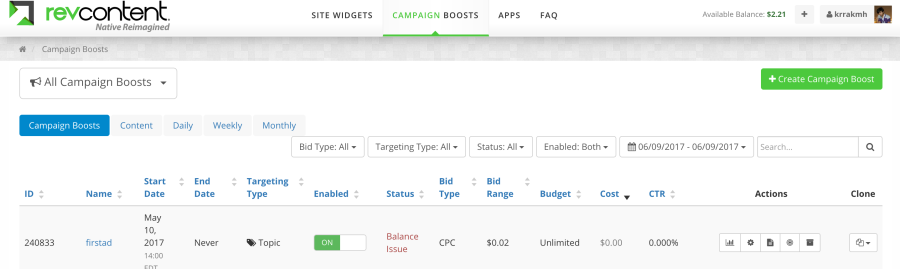
The traffic quality is usually respectable for native, especially if your creative actually fits the publishers. Forced curiosity headlines still get clicks, sure, but cleaner angles tend to hold users a bit longer.
| Format | Native ads |
| Targeting | Country, location, device, OS, language |
| Deposit | Historically low entry point, verify current minimum |
| Approval | Can be slow |
| Support | Email support |
Best for: Native traffic tests when you want a self-serve setup and decent inventory.
Skip if: You need fast approvals or white-glove support.
URL: https://www.revcontent.com/
4. Outbrain
Outbrain has usually leaned a bit more premium in feel. Cleaner publishers, more editorial expectations, less tolerance for messy funnels. If your page looks thin or your angle smells too affiliate-heavy, don’t be shocked if it struggles. But if your content is real, your creative is decent, and you’re after quality over raw cheapness, Outbrain is one of the stronger names here.
I wouldn’t call it the cheapest serious option anymore, at least not in the way people used to talk about “cheap traffic.” It’s more like cost-controlled native traffic if your quality bar is high enough.
| Format | Native ads |
| Targeting | Country, device, location and campaign-level options depending on account |
| Pricing | Usually higher floor than bargain-bin networks |
| Approval | Often quicker than some competitors, but policy-dependent |
| Support | Generally solid |
Best for: Editorial content, branded campaigns, cleaner arbitrage experiments.
Skip if: Your entire strategy depends on the absolute lowest CPC possible.
5. PopAds
PopAds is where things get cheap fast. And messy fast. I’ve had campaigns on pop traffic look amazing by volume and completely useless by revenue. Then once in a while, one lands nicely because the page loads fast, the offer is simple, and the geo is forgiving. That’s the game here. You are buying volume, not intent.
One thing I still like is the control. Frequency settings, bidding flexibility, and source-level optimization can help if you actually do the work. If you just launch and pray, PopAds will happily take your money.
My older tests showed decent delivery but weak conversion quality overall. That still matches how I think about it now. Good for cheap experiments. Not my first choice for direct-response campaigns unless the funnel is built for rough traffic.
| Format | Popunder, popup, tab-based formats |
| Targeting | Country, device, location, time, network and more |
| Deposit | Historically low, verify current minimum |
| Pricing | Very cheap in many geos |
| Support | Email and other channels depending on account |
Best for: Arbitrage testing, app installs, broad awareness, cheap traffic volume.
Skip if: You care deeply about bounce rate, brand feel, or clean analytics.
URL: http://Popads.net
6. Propeller
PropellerAds is one of those networks almost everyone in affiliate and arbitrage circles tests at some point. Big inventory. Many formats. Enough targeting to get yourself into trouble if you don’t know what you’re doing. The old version of this post focused a lot on pops, but Propeller has changed over time and now pushes multiple formats depending on account setup, including push and other performance-friendly options.
My honest experience with it was underwhelming. I spent a bit, watched the traffic come in, and the bounce rate was rough. Could that change with a better funnel and offer? Yes. But my baseline take remains the same. It’s a scale network, not a magic network.
| Format | Push, pop, display, redirects and other formats depending on account |
| Targeting | Country, device, connection type, carrier, OS, time and more |
| Deposit | Check current minimum, this has changed over time |
| Traffic quality | Highly variable |
| Support | Usually account-dependent |
Best for: High-volume testing across multiple cheap formats.
Skip if: You only have one landing page and one offer and can’t afford to lose on testing.
URL: https://propellerads.com/
7. PlugRush
Adult traffic is still one of the cheapest corners of online advertising. That hasn’t changed. What has changed is that many mainstream advertisers have even less tolerance for risk now, so this category is more niche than ever. PlugRush is worth mentioning only because some marketers can still make it work for the right offer. If your offer, tracking, compliance, and funnel can’t handle aggressive traffic, leave this alone.
I tested adult traffic years ago mostly out of curiosity and because some case studies made it sound like hidden gold. It wasn’t magic. But it did convert better than I expected in a few setups. Strange traffic sources sometimes work when the market is less crowded. That’s the honest part.
| Format | Adult native, banners, pops, redirects |
| Targeting | Country, device, OS, location, capping and more |
| Deposit | Historically very low entry point |
| Traffic type | Adult traffic |
| Support | Usually decent by email |
Best for: Adult offers, aggressive arbitrage experiments, dirt-cheap volume testing.
Skip if: Your brand, offer, or monetization setup can’t tolerate adult adjacency.
URL: https://www.plugrush.com/
8. Adf.ly
Adf.ly used to be a familiar name in cheap redirect and interstitial traffic. I’m keeping it here because it was in the original article, but this is one of those entries you should treat carefully. I would verify its current advertiser relevance before using it. Too many old traffic networks faded, changed focus, or stopped mattering while old blog posts kept recommending them like it was still 2018.
Back when I tested it, the quality was better than a lot of bargain pop traffic, but also more expensive. If the platform still fits your use case, fine. Just don’t build a plan around legacy reputation alone.
| Format | Interstitials, redirects and related formats |
| Pricing | Verify current advertiser rates and availability |
| Support | Varies |
| Status note | Legacy recommendation, confirm before spending |
Best for: Only if you confirm the platform still fits your campaign and is actively maintained for advertisers.
Skip if: You want a network with clear current momentum and modern support.
URL: https://adf.ly/
9. BuySellAds
BuySellAds is a different animal. It’s less “spray cheap clicks everywhere” and more “buy placements on specific sites that actually have real readers.” That means better traffic quality, but also a need for actual thinking. The old advice still holds in spirit. If you can buy fixed placements on the right site, and your math makes sense, you can do well here.
I like BuySellAds more for direct sponsorship-style buys, newsletter placements, and controlled display campaigns than for bargain traffic hunting. So yes, it belongs on the list historically, but no, I wouldn’t call it cheap in the same way as pop or redirect networks. It’s closer to smart media buying than cheap traffic buying.
| Format | Display, newsletter, sponsorship-style placements |
| Traffic quality | Usually stronger than blind network inventory |
| Payment | Multiple options depending on buy type |
| Use case | Targeted placements on known publishers |
Best for: Site-specific buying, cleaner traffic, brand-safe campaigns.
Skip if: You only care about the absolute lowest possible CPC.
URL: https://www.buysellads.com/
10. Infolinks
Infolinks is still around, which already says something in this industry. It has never been my first recommendation for scale, but it can be useful if your campaign benefits from contextual matching and you want to test beyond the usual giant platforms. The traffic quality is generally more respectable than the wild-west cheap networks, but the upside can also be smaller depending on your niche.
If I’m being blunt, I’d usually test other options first unless there’s a specific reason Infolinks fits your campaign. But it’s not nonsense traffic. It’s just not where I’d start.
| Format | Contextual, display and related ad units |
| Approval | Usually straightforward |
| Support | Generally decent |
| Use case | Context-driven traffic tests |
Best for: Contextual traffic experiments in niches where keyword relevance matters.
Skip if: You want aggressive scale fast.
URL: https://www.infolinks.com/
Who this cheap traffic strategy is actually for
Let me make this part clear because a lot of people read “cheap traffic” and think easy money.
- Good fit for: ad arbitrage, app installs, broad awareness, affiliate testing, headline testing, pre-lander funnels, geo experiments.
- Bad fit for: high-ticket offers, premium brands, fragile ad accounts, businesses that need strong buyer intent from day one.
Hidden cost most people miss: cheap traffic often needs more tools. Tracker, anti-bot filtering, faster hosting, more landing page tests, and more time. The click is cheap. The learning curve isn’t.
How I’d run an arbitrage business now
The old version of this section was too simple, so here’s the version I’d actually give a friend.
- Pick one traffic source first. Don’t test six networks at once and pretend the data means something.
- Build one fast landing page. Newsy, curiosity-driven, mobile-first. No bloated junk.
- Monetize with care. Display ads, affiliate offers, lead gen, or app install flow. Don’t stack every monetization method on one page like a desperate buffet.
- Track source IDs, widgets, and devices. If you can’t see where the traffic came from, you’re basically gambling.
- Kill losers quickly. Bad geo, bad placement, bad OS, bad hour of day. Cut it.
- Scale only after repeatability. One profitable day means nothing. You want a pattern.
If you’re trying to run arbitrage with display ads like AdSense, be careful. Policy risk is real, especially with low-quality or forced-click traffic. I’m not going to sugarcoat that. Plenty of people try it. Plenty of accounts get hurt too.
What I’d actually do: I’d start with a native source, probably Taboola or Revcontent, then build a simple content page around one proven angle. If I needed ultra-cheap testing volume, I’d use PopAds with strict caps and aggressive blocking. I would not start with random redirect traffic and hope it becomes a business.
Disclaimer: Cheap traffic can get you poor-quality users, bad engagement metrics, policy issues, or just straight-up wasted spend. Test at your own risk. Use common sense. And don’t assume a network’s dashboard tells the whole truth.
Other ways you can make money from cheap traffic
- Sell traffic onward at a markup, if you actually have a reliable source and a buyer who knows what they’re buying.
- Push affiliate offers, especially simple offers with broad appeal.
- Run install or lead-gen campaigns where volume matters more than buyer intent.
- Use it for awareness or message testing before spending bigger money elsewhere.
If you want the short version, here it is. Taboola is my pick for quality. Revcontent is my practical second option. PopAds is my cheap-volume test bed when I know the traffic will be rough and I’m okay with that.
That’s where I’d put my own money first. Not everywhere. Just there, then I’d watch the data like a hawk and cut fast if the traffic smelled off.
Some nights this business feels clever. Other nights it feels like paying strangers to ruin your analytics. That’s ad arbitrage. Welcome.

Keep reading
All guides →


8 comments
Comments are closed.
Hello, Hamza.
A friend and I were working in the arbitration business, buying plugrush traffic and selling it to exoclick, we were doing 100-150% ROI for every money we spent, but after a month I was banned from exoclick, now we do not know how it can continue with this business, do you think the arbitration business can still be profitable?
Nice Play.
It becomes difficult nowadays to run an arbitration business. It’s very hard to find a working method where you can generate good ROI. I recommend you to invest your time in long-term business strategy instead of short-term gains.
Still, you can try Viral blogging as many people still do. You can also sell traffic to other players like you were doing before but these things won’t sustain you for long.
I heard a friend of mine was Buying traffic from Taboola and selling to Adsense for Good ROI but I can’t assure you that it still works.
Let me know if you find something useful.
please am interested in selling traffic to people but i dont want to fiverr or do any freelancing and i dont want a traffic selling website please i need a any info or suggestion from you thanks
Nice info!
However, I’d like to know something ; when you stated that, popads DIDN’T convert well, what did you mean? No sales or no optins? Didn’t you get any clicks?
BEST REGARDS!
A lot of clicks but very low page spent time and not valuable at all.
Hello? You there?
Yes