Accounts Receivable
Accounts receivable (AR) represents money customers owe a business for goods or services already delivered, recorded as a current asset until payment is collected; When a company delivers a product or service and sends an invoice, it records a debit to AR and a credit to revenue; Subscription SaaS businesses with automated card billing have minimal AR headaches, since revenue is collected before or at time of service
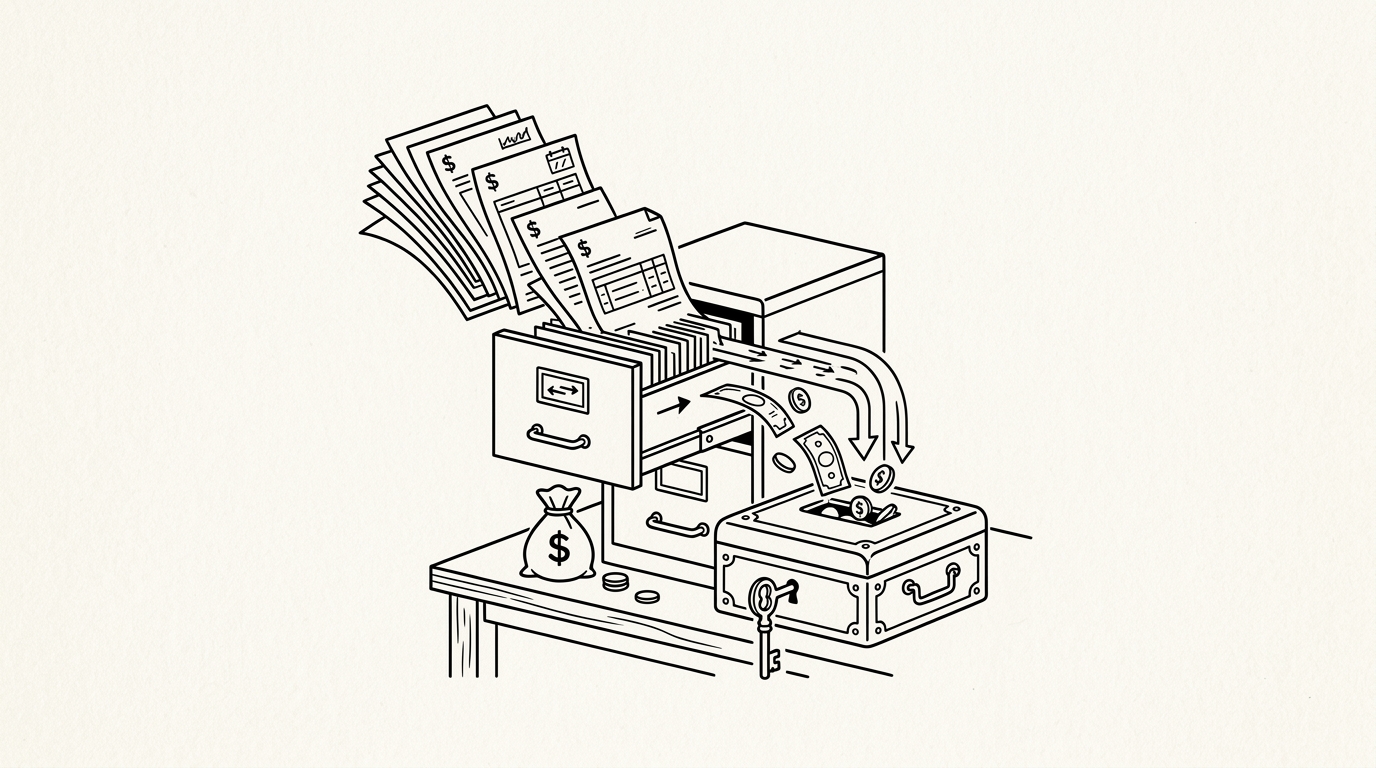

Accounts receivable (AR) represents money customers owe a business for goods or services already delivered, recorded as a current asset until payment is collected. High AR relative to revenue indicates slow collections, which can create cash flow strain even in a profitable business. For SaaS companies on automatic subscription billing, AR is typically low because payments are collected at the time of service; B2B SaaS with enterprise invoicing can carry significant AR.
How it works
When a company delivers a product or service and sends an invoice, it records a debit to AR and a credit to revenue. When the customer pays, AR decreases (debit cash, credit AR). AR aging reports track how long invoices have been outstanding, signaling when to send reminders or escalate to collections. Days Sales Outstanding (DSO), calculated as (AR / Annual Revenue) x 365, measures the average number of days it takes to collect payment after a sale.
Key facts
- DSO benchmark: A DSO under 45 days is generally healthy for B2B SaaS; DSO above 90 days suggests collection problems or overly lenient payment terms.
- Bad debt reserve: Accountants estimate a percentage of AR that will never be collected and record it as an allowance for doubtful accounts against the AR balance.
- Invoice factoring: Businesses with high AR and immediate cash needs can sell their receivables to a factoring company at a discount to accelerate cash inflow.
For builders
Subscription SaaS businesses with automated card billing have minimal AR headaches, since revenue is collected before or at time of service. The friction point arises when moving upmarket to annual enterprise contracts invoiced on Net 30 or Net 60 terms, where large deals can sit in AR for weeks after the deal closes. At that stage, tracking AR aging weekly and building escalation workflows into the CRM becomes necessary to maintain healthy cash flow alongside a growing sales pipeline.
Sources
- FASB. Financial Accounting Standards Board standards (US GAAP). fasb.org
- IFRS Foundation. International Financial Reporting Standards. ifrs.org
- IRS. Small business tax and accounting guidance. irs.gov
- AICPA-CIMA. Accounting standards and resources. aicpa-cima.com
- U.S. SEC. EDGAR public filings database. sec.gov
