Cash Flow
Cash flow describes the actual movement of money into and out of a business during a reporting period, distinct from accounting profit, which is based on accrual principles; Operating cash flow starts with net income and adjusts for non-cash items (depreciation, amortization) and changes in working capital accounts (AR, AP, deferred revenue, inventory); For founders managing a SaaS business, understanding the difference between MRR growth (accrual-based) and actual cash in the bank (cash-basis) is fundamental to avoiding nasty surprises
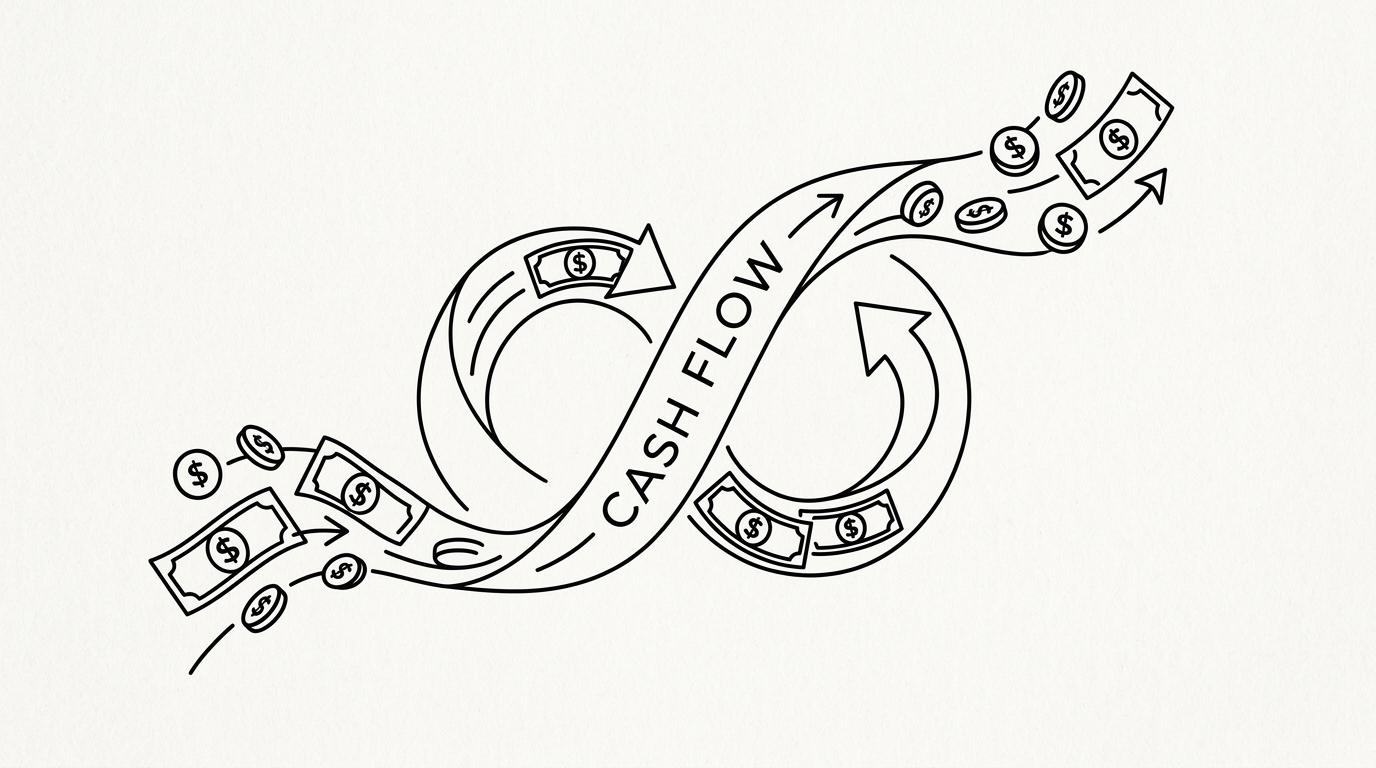

Cash flow describes the actual movement of money into and out of a business during a reporting period, distinct from accounting profit, which is based on accrual principles. A business can be profitable on paper yet cash-flow negative if customers pay slowly, inventory is building, or large capital expenditures are underway. The cash flow statement, one of the three core financial statements, breaks cash movement into three categories: operating activities (day-to-day business), investing activities (asset purchases and sales), and financing activities (debt and equity).
How it works
Operating cash flow starts with net income and adjusts for non-cash items (depreciation, amortization) and changes in working capital accounts (AR, AP, deferred revenue, inventory). Free cash flow, a key investor metric, is operating cash flow minus capital expenditures. For SaaS businesses, high deferred revenue from upfront annual subscriptions actually boosts operating cash flow above net income, since cash is collected before revenue is recognized. This is one reason SaaS businesses often have favorable cash dynamics even before reaching accounting profitability.
Key facts
- Free cash flow (FCF): Operating cash flow minus capex; the cash actually available to the business after maintaining and growing its asset base.
- SaaS cash advantage: Annual subscription prepayment creates positive cash flow timing: cash arrives before the revenue obligation is satisfied.
- Cash flow vs. profit: A company can be profitable but cash-flow negative (slow AR collection) or unprofitable but cash-flow positive (upfront prepayments funding operations).
For builders
For founders managing a SaaS business, understanding the difference between MRR growth (accrual-based) and actual cash in the bank (cash-basis) is fundamental to avoiding nasty surprises. The practical action is to maintain a 13-week rolling cash flow forecast in a spreadsheet or tool like Float, projecting expected inflows (subscription renewals, new MRR) against known outflows (payroll, vendor invoices, subscription renewals for your own tools). This forecast catches cash crunches weeks before they become crises.
Sources
- FASB. Financial Accounting Standards Board standards (US GAAP). fasb.org
- IFRS Foundation. International Financial Reporting Standards. ifrs.org
- IRS. Small business tax and accounting guidance. irs.gov
- AICPA-CIMA. Accounting standards and resources. aicpa-cima.com
- U.S. SEC. EDGAR public filings database. sec.gov
