Invoice Factoring
Invoice factoring is a form of asset-based financing where a company sells its accounts receivable to a factoring company at a discount (typically 1-5% of invoice value) in exchange for an immediate cash advance, usually 70-90% of the invoice face value; The business submits outstanding invoices to the factor for approval; Invoice factoring is most relevant to B2B service businesses, agencies, and publishers that invoice clients on Net 30 to Net 90 terms and need cash to cover payroll or operating costs before invoices are paid
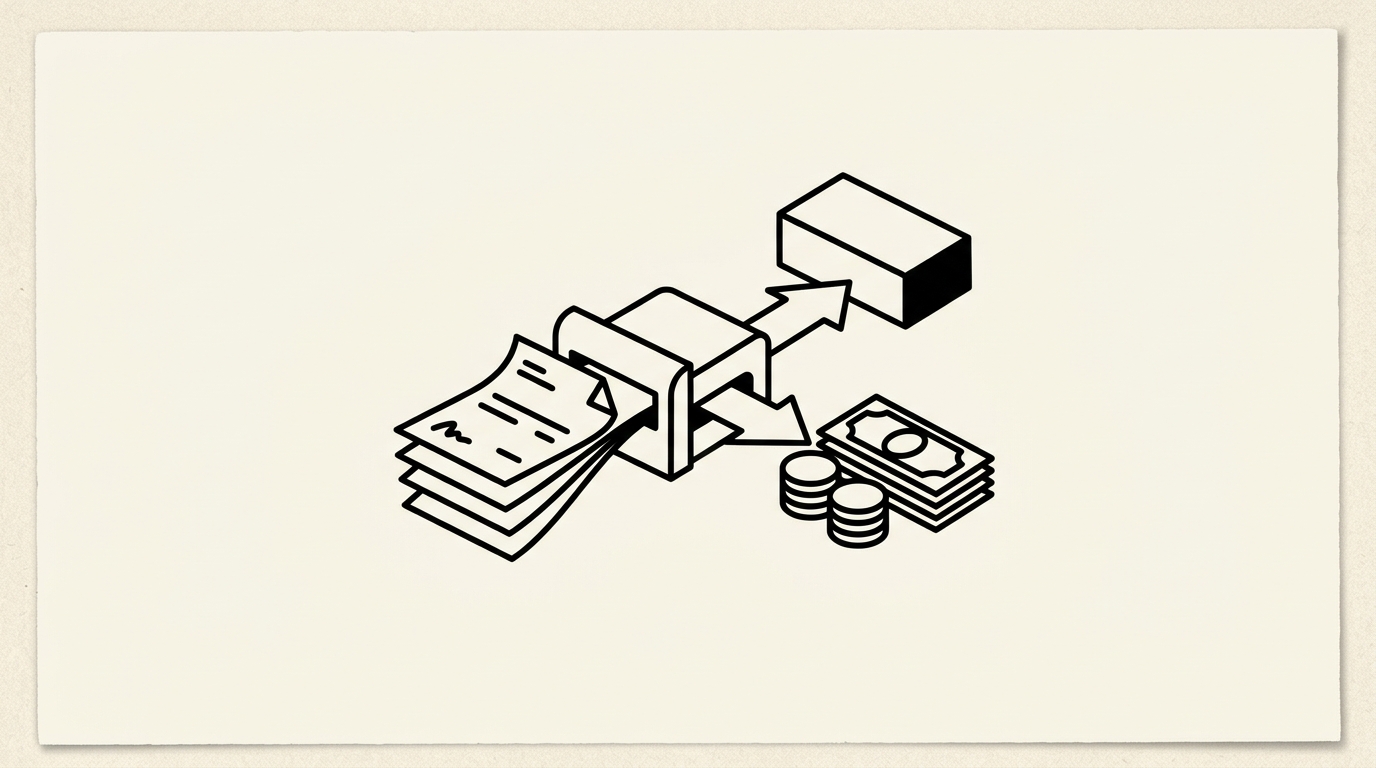

Invoice factoring is a form of asset-based financing where a company sells its accounts receivable to a factoring company at a discount (typically 1-5% of invoice value) in exchange for an immediate cash advance, usually 70-90% of the invoice face value. The factor collects payment directly from the customer and remits the remaining balance (minus the factoring fee) once the invoice is paid. Unlike a loan, factoring does not create debt on the balance sheet; it converts an existing asset (AR) into cash.
How it works
The business submits outstanding invoices to the factor for approval. The factor advances a percentage of the invoice value (the advance rate, typically 70-90%) within 24-48 hours. The factor then contacts the customer to collect the invoice. When the customer pays, the factor releases the remaining balance minus its fee to the business. Recourse factoring means the business must buy back invoices that go unpaid; non-recourse factoring transfers credit risk to the factor (and commands a higher fee).
Key facts
- Effective cost: A 2% factoring fee on a Net 60 invoice equates to an annualized cost of approximately 12%, comparable to a business line of credit.
- Customer notification: Notification factoring requires informing customers that their invoice has been sold; non-notification factoring keeps the arrangement confidential.
- Eligibility focus: Factors evaluate the creditworthiness of the invoiced customers, not the business selling the invoices, making it accessible to revenue-positive but cash-constrained companies.
For builders
Invoice factoring is most relevant to B2B service businesses, agencies, and publishers that invoice clients on Net 30 to Net 90 terms and need cash to cover payroll or operating costs before invoices are paid. For SaaS businesses with automatic subscription billing, AR is minimal, so factoring is rarely applicable. The exception would be enterprise SaaS companies with large annual contracts invoiced upfront: if a major customer has Net 60 payment terms, factoring can convert that invoice into immediate cash to fund growth without diluting equity.
Sources
- FASB. Financial Accounting Standards Board standards (US GAAP). fasb.org
- IFRS Foundation. International Financial Reporting Standards. ifrs.org
- IRS. Small business tax and accounting guidance. irs.gov
- AICPA-CIMA. Accounting standards and resources. aicpa-cima.com
- U.S. SEC. EDGAR public filings database. sec.gov
