Knowledge Graph
Knowledge Graph is Google's large-scale semantic database of entities (people, places, organizations, concepts, products, and more) and the relationships between them, introduced in 2012; Google's systems continuously extract entity information from web content, structured data markup (schema.org), and curated knowledge bases like Wikidata to build and update the Knowledge Graph; For content publishers aiming to establish brand authority, getting WikiWalls into the Knowledge Graph as a recognized media entity is a meaningful long-term investment
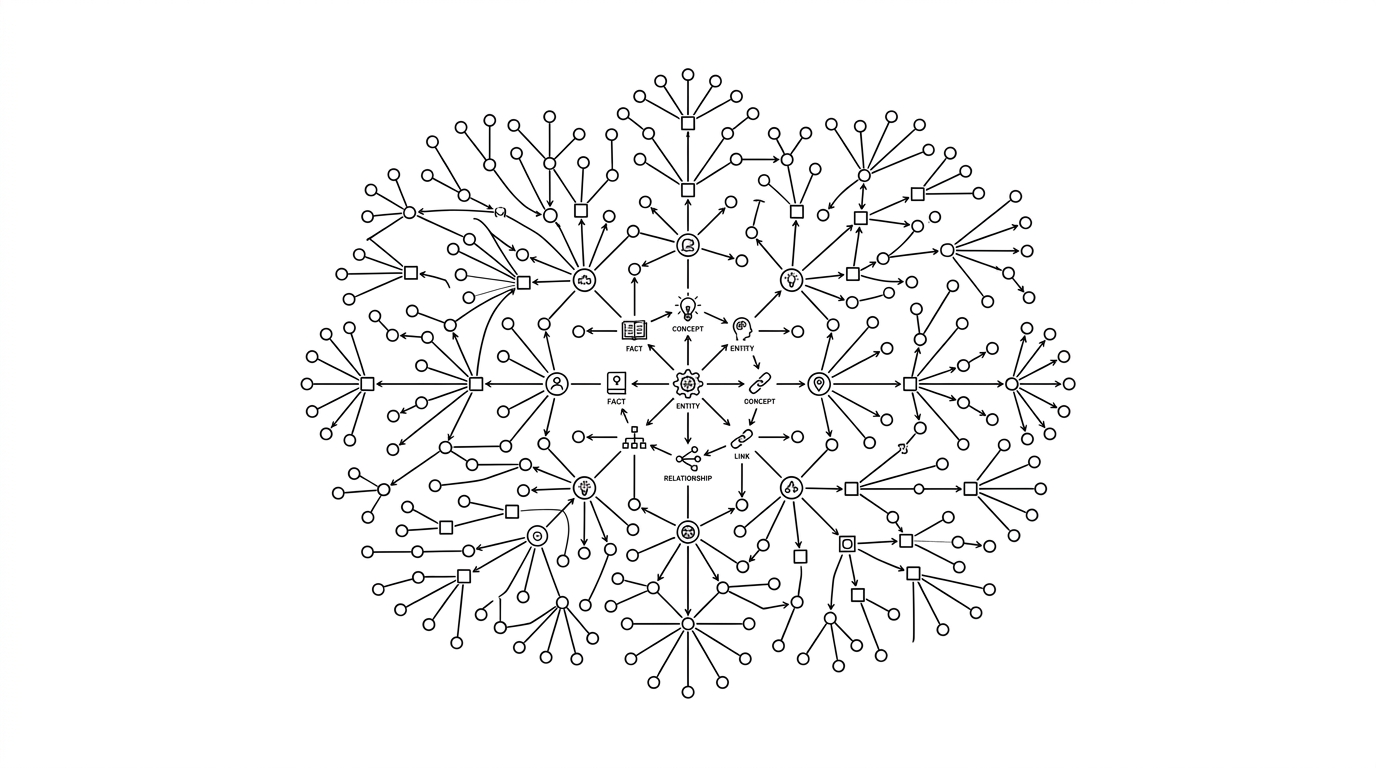

Knowledge Graph is Google’s large-scale semantic database of entities (people, places, organizations, concepts, products, and more) and the relationships between them, introduced in 2012. It is the foundational data structure behind Google’s entity-aware search capabilities: knowledge panels (the information boxes on the right side of SERPs), direct answer features, AI Overviews, and the entity disambiguation that allows Google to understand that ‘Apple’ in a tech context refers to the company, not the fruit. The Knowledge Graph is populated from authoritative sources including Wikipedia, Wikidata, Freebase, and structured data across the web.
How it works
Google’s systems continuously extract entity information from web content, structured data markup (schema.org), and curated knowledge bases like Wikidata to build and update the Knowledge Graph. Each entity in the graph has an entity ID (a Google Knowledge Graph ID) and is associated with facts, relationships to other entities, and source URLs. When a user searches for an entity, Google can surface structured information about it without reading a single webpage, because the facts are already stored in the graph. Publishers can influence Knowledge Graph representation through consistent schema markup, accurate Wikidata entries, and authoritative content that serves as a primary source.
Key facts
- Knowledge panel eligibility: Qualifying for a knowledge panel requires meeting a significance threshold; organizations typically need Wikipedia coverage, Wikidata entries, or widespread authoritative web mentions.
- Entity ID: Google assigns each recognized entity a unique ID (visible in the KGMID URL parameter in some knowledge panel URLs) that distinguishes it from same-named entities.
- Structured data input: Organization, Person, LocalBusiness, and Product schema markup across a site’s web properties contributes to the entity data Google uses to build and refine Knowledge Graph entries.
For builders
For content publishers aiming to establish brand authority, getting WikiWalls into the Knowledge Graph as a recognized media entity is a meaningful long-term investment. The path involves creating a Wikidata entry for the publication, adding Organization schema with sameAs properties pointing to the Wikidata entity, building consistent structured citations across industry directories and podcast appearances, and maintaining a Wikipedia-eligible notability profile. Once in the Knowledge Graph, brand searches trigger a knowledge panel, and the brand entity receives preferential treatment in E-E-A-T evaluation and entity-based ranking signals.
Sources
- Google. Structured data for AI Overviews and rich results. developers.google.com
- Google. AI Overviews and generative search updates. blog.google
- Semrush. Answer Engine Optimization research. semrush.com
- Ahrefs. Zero-click search and AEO research. ahrefs.com
- Search Engine Journal. AI search and AEO coverage. searchenginejournal.com
