Internal Linking
Internal linking refers to hyperlinks that connect pages within the same website domain, as opposed to external links pointing to other domains; When a page receives external backlinks, it accumulates link equity that can be passed to other pages through internal links; For WikiWalls, internal linking between glossary entries (using 'related terms' sections and in-definition hyperlinks) serves both SEO and user experience goals simultaneously
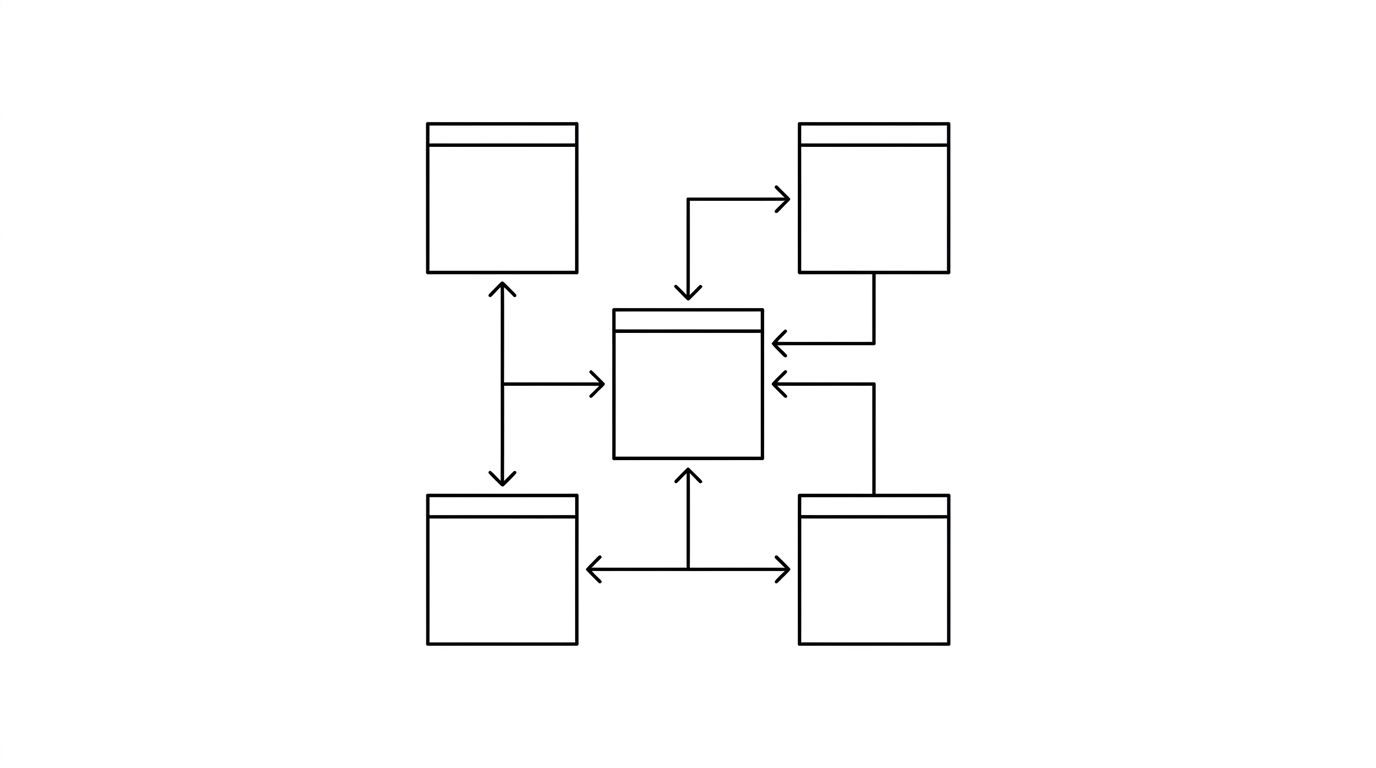

Internal linking refers to hyperlinks that connect pages within the same website domain, as opposed to external links pointing to other domains. Internal links serve multiple functions in SEO: they distribute link equity (PageRank) from high-authority pages to important target pages, signal content relationships and topic clusters to search engines, establish crawl paths that ensure search engine bots discover and index all pages, and guide users toward related content that increases session depth and reduces bounce rate.
How it works
When a page receives external backlinks, it accumulates link equity that can be passed to other pages through internal links. Link equity flows through the site according to the internal link graph: pages linked frequently from high-authority pages receive more equity; pages buried deep in the architecture (requiring many clicks to reach from the homepage) receive less. For SEO, the goal is to link relevant content together with descriptive anchor text, ensure important money pages (category pages, high-converting landing pages) receive strong internal link signals, and avoid orphan pages that have no internal links pointing to them.
Key facts
- Anchor text specificity: Descriptive anchor text (‘see our guide to ACH transfers’) provides more contextual signal than generic text (‘click here’), improving the ranking relevance of the target page.
- PageRank sculpting: Adding internal links from high-traffic or high-authority pages (such as the site homepage or a popular evergreen guide) directly to target pages can lift their search rankings.
- Crawl efficiency: Sites with poor internal linking force Googlebot to discover content through sitemaps alone, reducing crawl frequency and potentially delaying indexing of new content.
For builders
For WikiWalls, internal linking between glossary entries (using ‘related terms’ sections and in-definition hyperlinks) serves both SEO and user experience goals simultaneously. Each entry that links to other definitions creates a knowledge graph within the site, signaling to Google that the site is a comprehensive topical authority on founder and publisher terminology. The practical recommendation is to link each new entry to 3-5 existing entries with relevant anchor text, and to update older entries to link to new ones, ensuring the internal link graph grows proportionally with the content catalog.
Sources
- Google. Search Central documentation. developers.google.com
- Google. SEO Starter Guide. developers.google.com
- W3C. HTML5 recommendation, the foundation for semantic markup. w3.org
- Schema.org. Full type hierarchy. schema.org
- Ahrefs. Large-scale SEO research studies. ahrefs.com
