CAC (Customer Acquisition Cost)
CAC (Customer Acquisition Cost) is the total cost of sales and marketing activities divided by the number of new customers acquired in a given period; CAC is calculated by dividing total sales and marketing expenses (salaries, ad spend, events, tooling) by the number of new customers acquired in the same period; Reducing CAC through product-led growth, referral loops, and content compounds over time, whereas paid acquisition CAC tends to increase as the most efficient audiences saturate
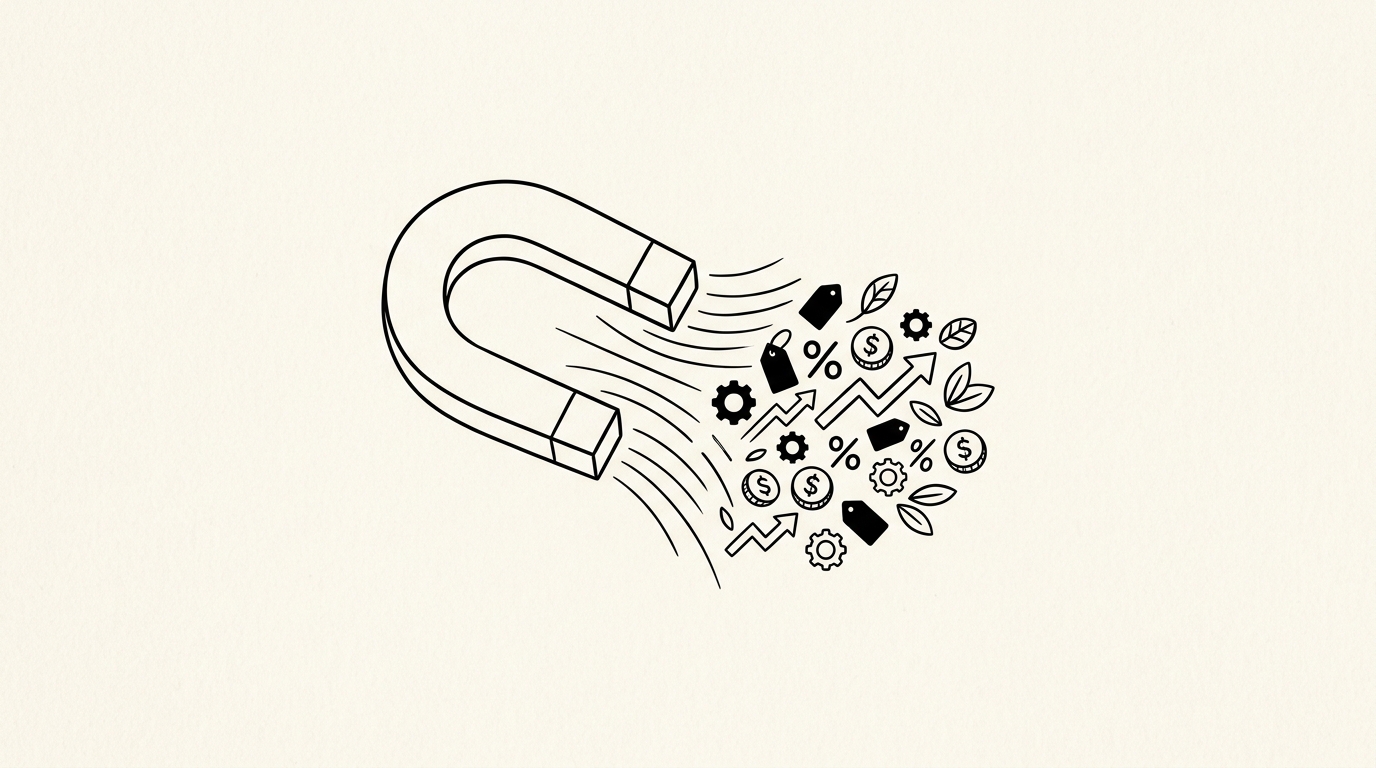

CAC (Customer Acquisition Cost) is the total cost of sales and marketing activities divided by the number of new customers acquired in a given period. It represents the investment required to convert a prospect into a paying customer.
How it works
CAC is calculated by dividing total sales and marketing expenses (salaries, ad spend, events, tooling) by the number of new customers acquired in the same period. Blended CAC includes all channels; channel CAC isolates specific acquisition sources like paid search or outbound SDR motions.
Key facts
- CAC payback period: Months of gross margin needed to recover CAC; under 12 months is healthy for SMB SaaS
- LTV:CAC ratio: A ratio above 3x indicates a viable unit economics model; below 1x means losing money on each customer
- CAC by channel: Paid CAC and organic CAC differ significantly; PLG motions often produce far lower blended CAC
For builders
Reducing CAC through product-led growth, referral loops, and content compounds over time, whereas paid acquisition CAC tends to increase as the most efficient audiences saturate. Tracking CAC payback period alongside LTV reveals whether growth is creating or destroying value.
Sources
- Bessemer Venture Partners. State of the Cloud annual report. bvp.com
- SaaStr. SaaS benchmarks and metrics archive. saastr.com
- Bain & Company. The Net Promoter System. bain.com
- KPMG. Private SaaS Company Survey. kpmg.com
- ChartMogul. SaaS metrics benchmarks and definitions. chartmogul.com
