Accounts Payable
Accounts payable (AP) represents money a company owes to its creditors for goods or services already received, recorded as a current liability on the balance sheet until payment is made; When a business receives a vendor invoice, it enters the amount into its accounting system as a debit to the relevant expense account and a credit to accounts payable; For small SaaS businesses, AP is most commonly cloud software subscriptions, contractor invoices, and infrastructure costs
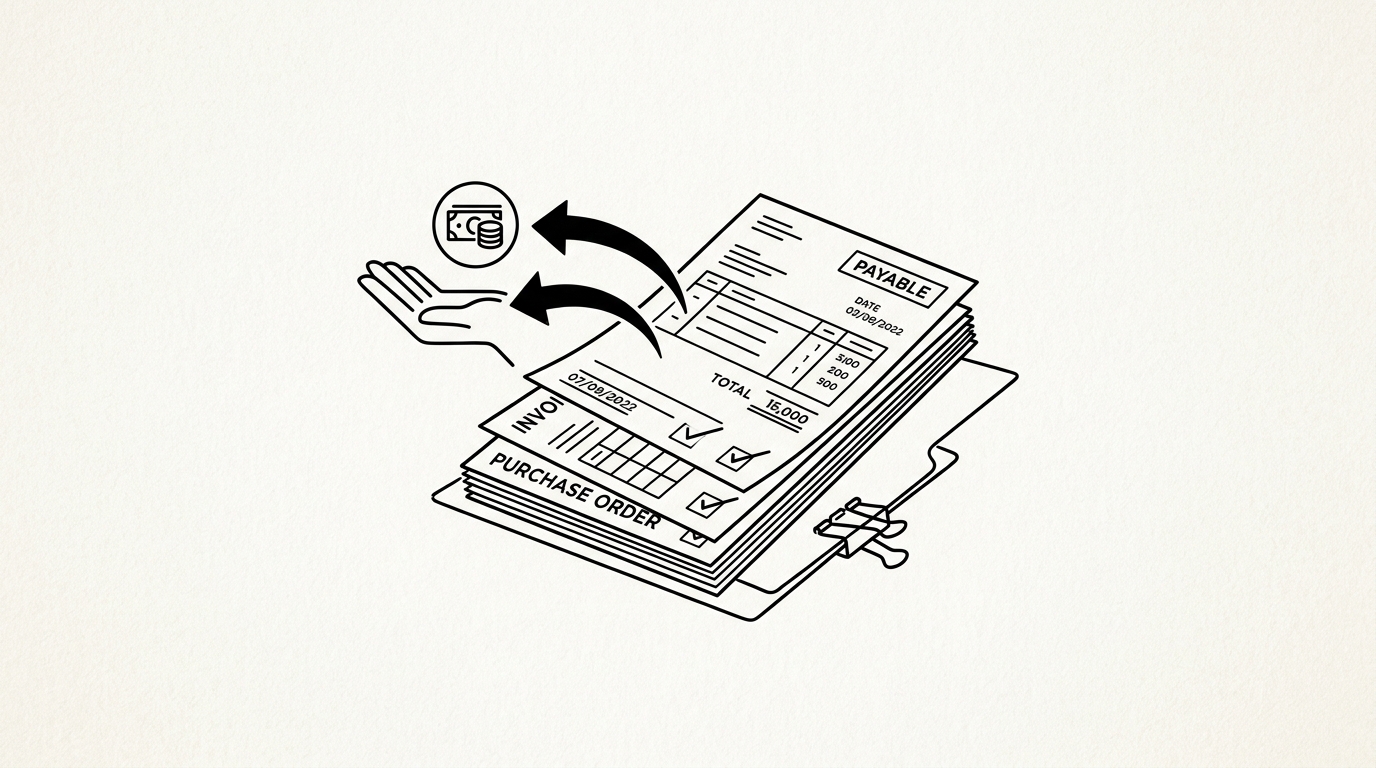

Accounts payable (AP) represents money a company owes to its creditors for goods or services already received, recorded as a current liability on the balance sheet until payment is made. It is the business equivalent of a personal bill that is due but not yet paid. Managing AP effectively involves balancing cash preservation (paying as late as terms allow) against vendor relationship health and the value of early-payment discounts.
How it works
When a business receives a vendor invoice, it enters the amount into its accounting system as a debit to the relevant expense account and a credit to accounts payable. When the invoice is paid, the AP balance decreases (debit AP, credit cash). AP aging reports categorize outstanding invoices by how long they have been unpaid (0-30 days, 31-60 days, 61-90 days, 90+ days), helping finance teams prioritize payments and spot overdue invoices before they damage vendor relationships or trigger late fees.
Key facts
- Payment terms: Common terms include Net 30 (payment due 30 days after invoice date) and 2/10 Net 30 (2% discount if paid within 10 days, otherwise due in 30).
- AP automation: Tools like Bill.com, Stampli, and Ramp Bill Pay automate invoice intake, approval routing, and payment scheduling.
- Cash flow impact: Strategically stretching AP (paying closer to due dates) conserves cash without incurring fees, effectively using vendor credit as short-term financing.
For builders
For small SaaS businesses, AP is most commonly cloud software subscriptions, contractor invoices, and infrastructure costs. Centralizing invoice management in a tool like Bill.com or Ramp prevents the common founder problem of missing invoices that arrive in personal email inboxes. At scale, AP automation reduces the labor cost of payment processing and creates a clean audit trail that simplifies monthly close and tax preparation.
Sources
- FASB. Financial Accounting Standards Board standards (US GAAP). fasb.org
- IFRS Foundation. International Financial Reporting Standards. ifrs.org
- IRS. Small business tax and accounting guidance. irs.gov
- AICPA-CIMA. Accounting standards and resources. aicpa-cima.com
- U.S. SEC. EDGAR public filings database. sec.gov
