Structured Output (LLM)
Structured Output (LLM) refers to the capability of constraining a language model's generation to produce valid, schema-conforming data rather than unconstrained text; Providers implement structured output either through logit masking, which zeros out token probabilities for tokens that would violate the schema at each generation step, or through post-generation validation with retry; Structured output removes the need for regex or LLM-based post-processing to extract data from model responses
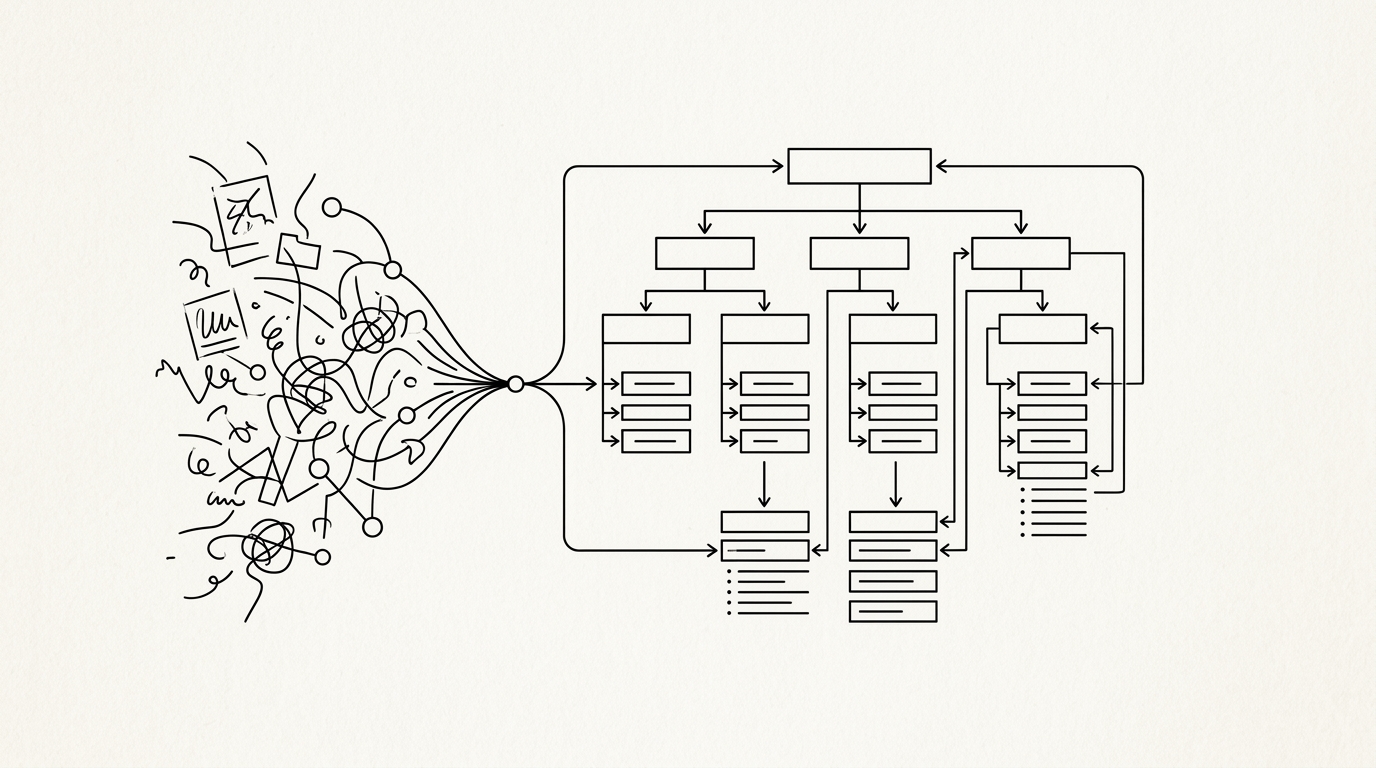

Structured Output (LLM) refers to the capability of constraining a language model’s generation to produce valid, schema-conforming data rather than unconstrained text. Using JSON mode, grammar-constrained sampling, or tool-calling responses, the model emits machine-parseable output that downstream application code can consume without fragile string parsing.
How it works
Providers implement structured output either through logit masking, which zeros out token probabilities for tokens that would violate the schema at each generation step, or through post-generation validation with retry. JSON mode instructs the model to produce valid JSON but does not guarantee schema adherence; full structured output APIs use constrained decoding to enforce field names, types, and required properties.
Key facts
- OpenAI API: The response_format parameter with json_schema enables strict structured output with schema validation.
- Anthropic: Claude supports structured output via tool use, where the model must return arguments matching a declared JSON Schema.
- Grammar-constrained decoding: Libraries like Outlines and Guidance implement token-level grammar enforcement locally.
- Reliability: Constrained decoding eliminates JSON parse errors; JSON mode reduces but does not eliminate them.
For builders
Structured output removes the need for regex or LLM-based post-processing to extract data from model responses. It is essential for any pipeline where model output feeds directly into application logic: extracting entities, classifying records, populating database rows, or triggering downstream API calls. Always define schemas with explicit required fields and descriptions to help the model understand what to populate.
Sources
- Wei, J., et al. (2022). Chain-of-Thought Prompting Elicits Reasoning in Large Language Models. arXiv:2201.11903. arxiv.org
- Brown, T., et al. (2020). Language Models are Few-Shot Learners. arXiv:2005.14165. arxiv.org
- Anthropic. Prompt engineering best practices. anthropic.com
- OpenAI. Prompt engineering guide. platform.openai.com
- NIST. (2023). AI Risk Management Framework. nist.gov
