REST API
A REST API (Representational State Transfer) is an architectural style for building networked services where resources are identified by URLs and manipulated using standard HTTP verbs (GET, POST, PUT, PATCH, DELETE); Clients send HTTP requests to resource endpoints (for example, GET /users/42) and receive responses in JSON or XML; REST APIs power the majority of SaaS integrations, webhooks, and mobile backends
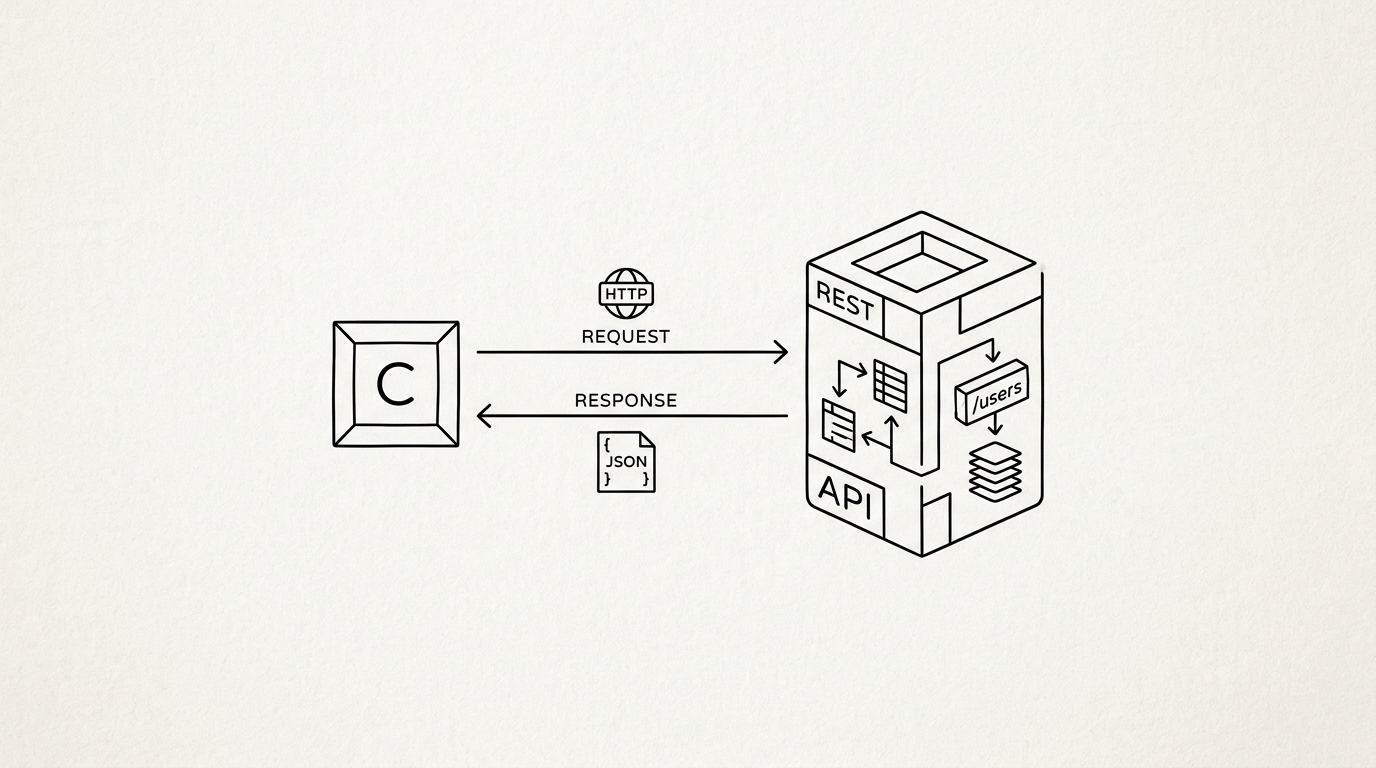

A REST API (Representational State Transfer) is an architectural style for building networked services where resources are identified by URLs and manipulated using standard HTTP verbs (GET, POST, PUT, PATCH, DELETE). REST constrains interactions to be stateless, meaning each request contains all information needed to process it.
How it works
Clients send HTTP requests to resource endpoints (for example, GET /users/42) and receive responses in JSON or XML. The server does not retain session state between requests, so authentication credentials or tokens must be included with every call.
Key facts
- Stateless: No server-side session state; each request is self-contained
- Resource-oriented: URLs represent nouns (resources), HTTP verbs represent actions
- Cacheable: GET responses can be cached by clients and intermediaries to improve performance
For builders
REST APIs power the majority of SaaS integrations, webhooks, and mobile backends. Designing clean, versioned REST endpoints early prevents breaking changes as your API consumer base grows.
Sources
- Fielding, R. (2000). Architectural Styles and the Design of Network-based Software Architectures. UC Irvine. ics.uci.edu
- IETF. RFC 9110: HTTP Semantics. datatracker.ietf.org
- IETF. RFC 9112: HTTP/1.1. datatracker.ietf.org
- OWASP. API Security Top 10 (2023). owasp.org
- MDN Web Docs. HTTP reference. developer.mozilla.org
