MVNO (Mobile Virtual Network Operator)
MVNO (Mobile Virtual Network Operator) is a telecommunications company that provides mobile voice and data services to consumers without owning or operating its own cellular network infrastructure; MVNOs connect to their host MNO's network via an interconnect agreement that grants them access to the MNO's radio access network and core infrastructure; Understanding that most travel eSIM providers are MVNOs helps explain why the same provider can deliver excellent service in one country and poor service in another
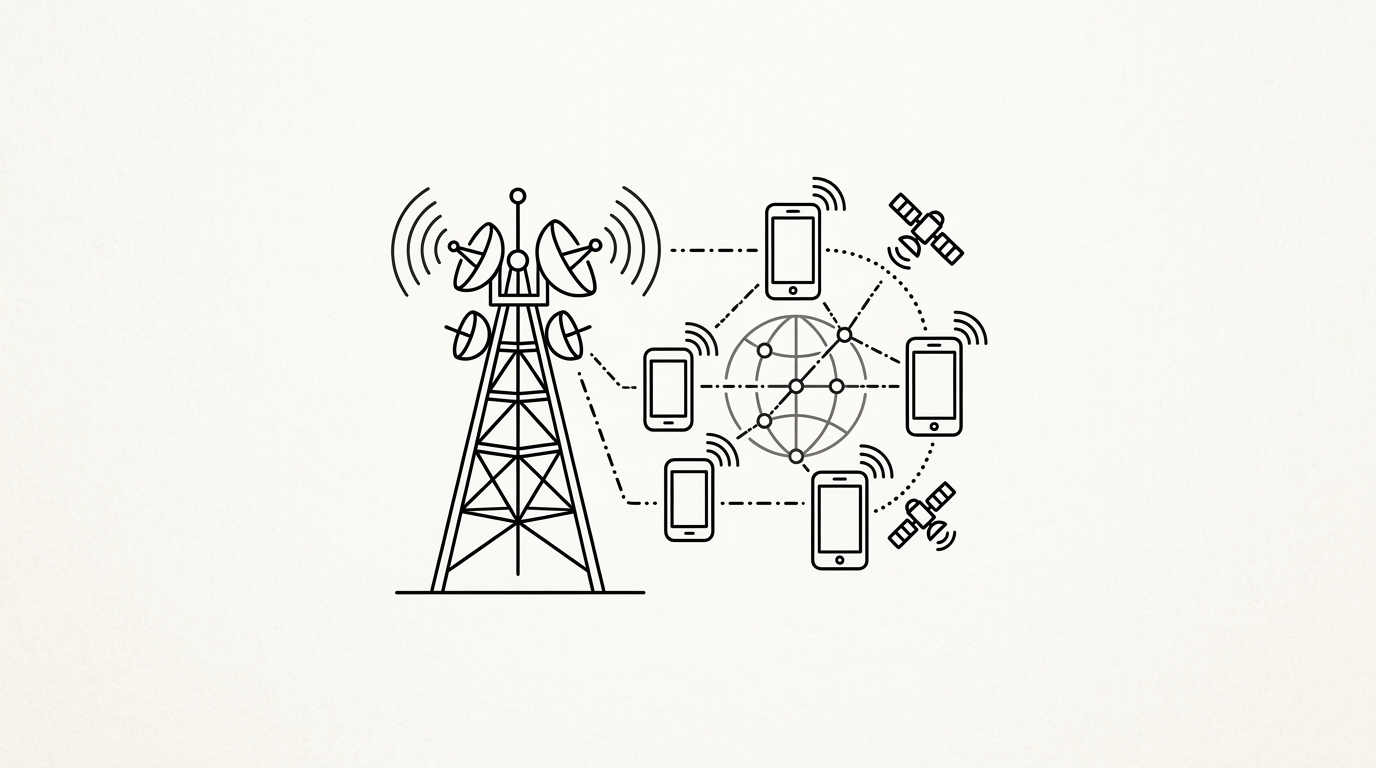

MVNO (Mobile Virtual Network Operator) is a telecommunications company that provides mobile voice and data services to consumers without owning or operating its own cellular network infrastructure. MVNOs purchase wholesale access to network capacity from one or more host carriers (Mobile Network Operators, or MNOs) and resell that access under their own branding, pricing, and customer experience. The majority of travel eSIM providers are MVNOs that aggregate capacity from multiple regional MNOs to offer multi-country plans.
How it works
MVNOs connect to their host MNO’s network via an interconnect agreement that grants them access to the MNO’s radio access network and core infrastructure. The MVNO may operate its own HLR/HSS (a ‘full MVNO’) for maximum control, or rely on the MNO’s HLR (a ‘light MVNO’) for a faster launch with less flexibility. Travel eSIM MVNOs typically broker with dozens of regional MNOs, embedding steering logic that selects the best available network in each country when a device registers.
Key facts
- Examples: Airalo, Nomad, Holafly, and Ubigi are MVNOs that aggregate multi-country eSIM plans from regional carrier partners
- Quality variability: Since MVNOs share MNO capacity, service quality depends heavily on the underlying host carrier in each country
- No towers: MVNOs hold no spectrum licenses and operate no cell towers; all radio infrastructure belongs to their MNO partners
For builders
Understanding that most travel eSIM providers are MVNOs helps explain why the same provider can deliver excellent service in one country and poor service in another. The MVNO’s value is in their aggregation, pricing, and activation UX, not in their radio infrastructure. When researching a plan, checking which MNO the MVNO partners with in each target country is a reliable way to predict real-world performance.
Sources
- GSMA. eSIM specifications and consumer protections. gsma.com
- BEREC. EU electronic communications regulators publications, including roaming. berec.europa.eu
- European Commission. Roam-like-at-home and fair use policy framework. digital-strategy.ec.europa.eu
- FCC. Cell phone unlocking, MVNO, and consumer protection FAQs. fcc.gov
- GSMA. Mobile spectrum positions and network policy. gsma.com
