Link Velocity
Link velocity refers to the speed and pattern at which a website earns new inbound backlinks over a period of time; Google's web crawl continuously discovers new links pointing to any given domain and tracks when each link was first seen; For indie publishers and SaaS content marketers building links organically, link velocity is a metric to monitor but rarely to actively manage: sustainable content-driven link building naturally produces healthy velocity patterns
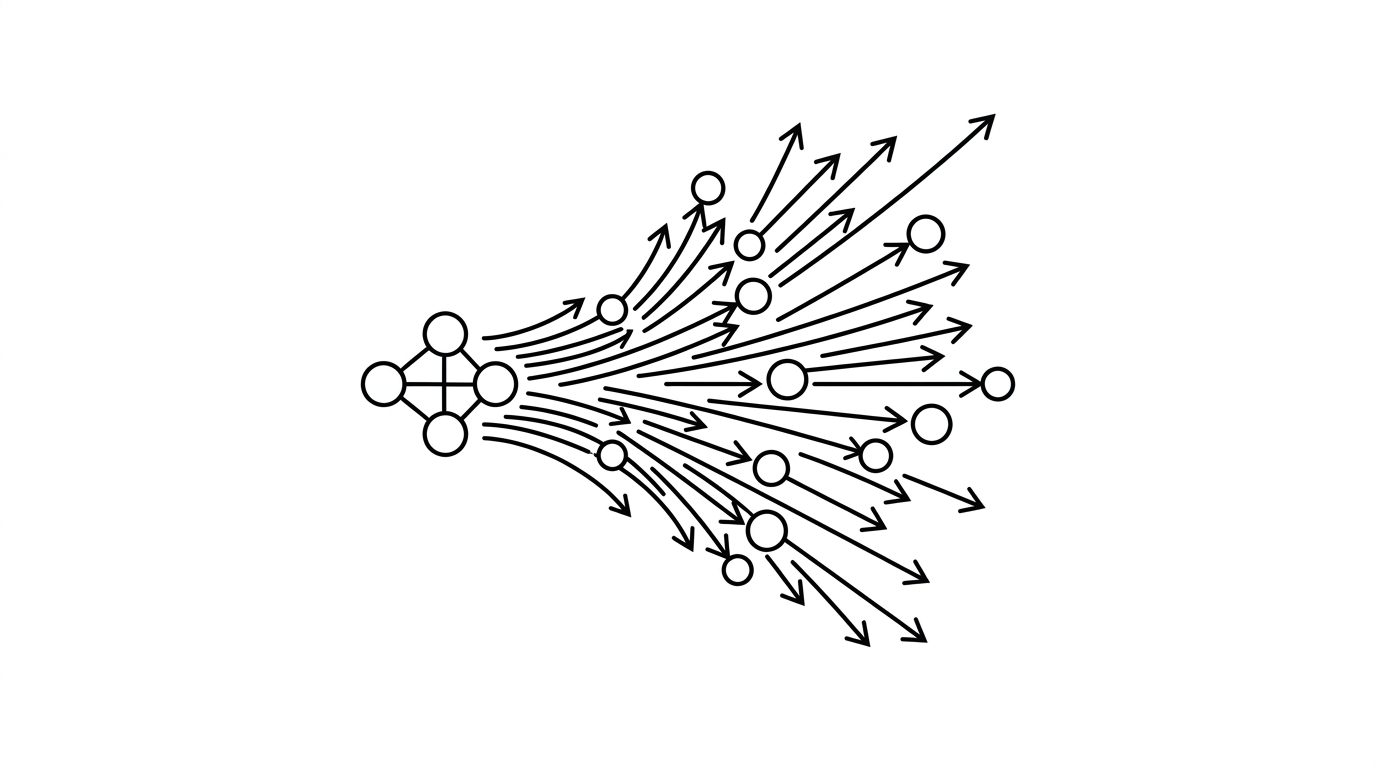

Link velocity refers to the speed and pattern at which a website earns new inbound backlinks over a period of time. A natural, organic link velocity reflects steady link acquisition as content is discovered, shared, and referenced by other publishers. Unnatural link velocity patterns, such as sudden spikes in link acquisition followed by plateaus, are associated with link-building campaigns or purchased links and can trigger manual review or algorithmic penalties from Google. Link velocity is one of the contextual signals Google uses when evaluating the trustworthiness and manipulation risk of a site’s backlink profile.
How it works
Google’s web crawl continuously discovers new links pointing to any given domain and tracks when each link was first seen. The pattern of link acquisition over time is compared against the site’s historical baseline and against patterns typical of sites in the same niche. A new domain that earns 50 links per month organically for 12 months has a natural velocity profile. The same domain that acquires 2,000 links in a single month from low-quality directories exhibits a suspicious velocity spike, even if the total link count is the same. Link velocity is monitored through tools like Ahrefs (which tracks new and lost referring domains over time) and Majestic’s Trust Flow trends.
Key facts
- New site consideration: New domains naturally have accelerating link velocity as they gain initial recognition; the concern is velocity spikes on established sites with sudden deviations from their historical pattern.
- Negative SEO risk: Competitors can artificially inflate a site’s link velocity with low-quality links (negative SEO attack), though Google’s systems and the disavow tool provide some protection.
- Content virality: Legitimate viral content (a study, tool, or resource that earns thousands of links in days) can create velocity spikes that Google accounts for contextually when the content itself is visible and high-quality.
For builders
For indie publishers and SaaS content marketers building links organically, link velocity is a metric to monitor but rarely to actively manage: sustainable content-driven link building naturally produces healthy velocity patterns. The risk scenario is an agency or freelancer delivering purchased links in bulk; if the acquisition pattern looks manufactured, it can trigger a manual action. Auditing link velocity quarterly in Ahrefs (new referring domains trend over 12 months) and comparing it against content publication pace gives early warning if anything looks anomalous.
Sources
- Google. Search Central documentation. developers.google.com
- Google. SEO Starter Guide. developers.google.com
- W3C. HTML5 recommendation, the foundation for semantic markup. w3.org
- Schema.org. Full type hierarchy. schema.org
- Ahrefs. Large-scale SEO research studies. ahrefs.com
