Dual SIM
Dual SIM is a hardware and software capability found in many modern smartphones that allows two independent cellular subscriptions to operate on the same device at the same time; In a DSDS configuration, both SIM slots maintain independent radio registrations and can each receive calls and messages, but only one can transmit data at a time (the data SIM is selected in settings); Dual SIM is the standard workflow for builders who travel without wanting to lose access to their primary number
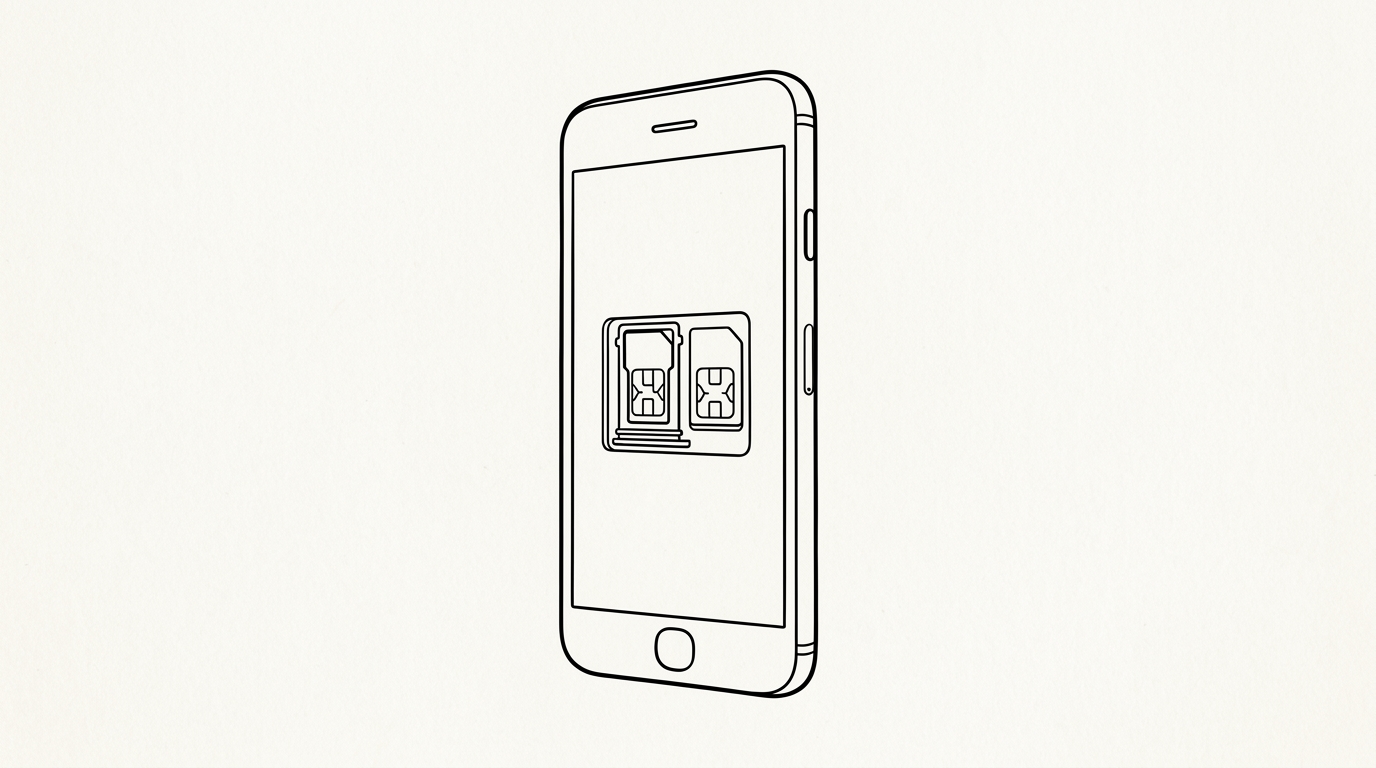

Dual SIM is a hardware and software capability found in many modern smartphones that allows two independent cellular subscriptions to operate on the same device at the same time. On eSIM-capable devices, Dual SIM is commonly implemented as one physical nano-SIM slot plus one eSIM slot (DSDS: Dual SIM Dual Standby), or as two active eSIM profiles simultaneously on newer hardware. This lets users keep a home number active for calls and SMS while using a separate local data plan for cheaper internet access abroad.
How it works
In a DSDS configuration, both SIM slots maintain independent radio registrations and can each receive calls and messages, but only one can transmit data at a time (the data SIM is selected in settings). Newer Dual SIM Active (DSSA) implementations support simultaneous data on both SIMs. On iPhone models from the 14 onward (in most markets), two eSIM profiles can be active simultaneously without any physical SIM tray, simplifying the travel workflow considerably.
Key facts
- DSDS vs. DSSA: Dual SIM Dual Standby switches data between SIMs manually; Dual SIM Active supports concurrent data on both
- Carrier lock risk: Some carriers lock devices to prevent eSIM activation on competing providers, which affects Dual SIM utility for travelers
- iPhone 14 onward: US iPhone 14+ models are eSIM-only with no physical SIM slot, supporting multiple eSIM profiles simultaneously
For builders
Dual SIM is the standard workflow for builders who travel without wanting to lose access to their primary number. The typical setup keeps the home carrier SIM for voice, SMS, and authenticator apps tied to that number, while the travel eSIM handles all data traffic. Testing this configuration before departure is important since some app-based two-factor authentication systems behave differently when the primary number SIM is in standby mode.
Sources
- GSMA. eSIM specifications and consumer protections. gsma.com
- BEREC. EU electronic communications regulators publications, including roaming. berec.europa.eu
- European Commission. Roam-like-at-home and fair use policy framework. digital-strategy.ec.europa.eu
- FCC. Cell phone unlocking, MVNO, and consumer protection FAQs. fcc.gov
- GSMA. Mobile spectrum positions and network policy. gsma.com
