DDR5 RAM
DDR5 RAM (Double Data Rate 5 Synchronous Dynamic Random-Access Memory) is the current generation of system memory, offering double the bandwidth, higher density, and improved power efficiency compared to DDR4; DDR5 uses a 32-bit channel per 64-bit DIMM (versus DDR4's single 64-bit channel), enabling two independent sub-channels for improved latency on mixed workloads; For APU-based mini PCs and workstations, DDR5 bandwidth is critical because the integrated GPU draws from the same memory pool as the CPU
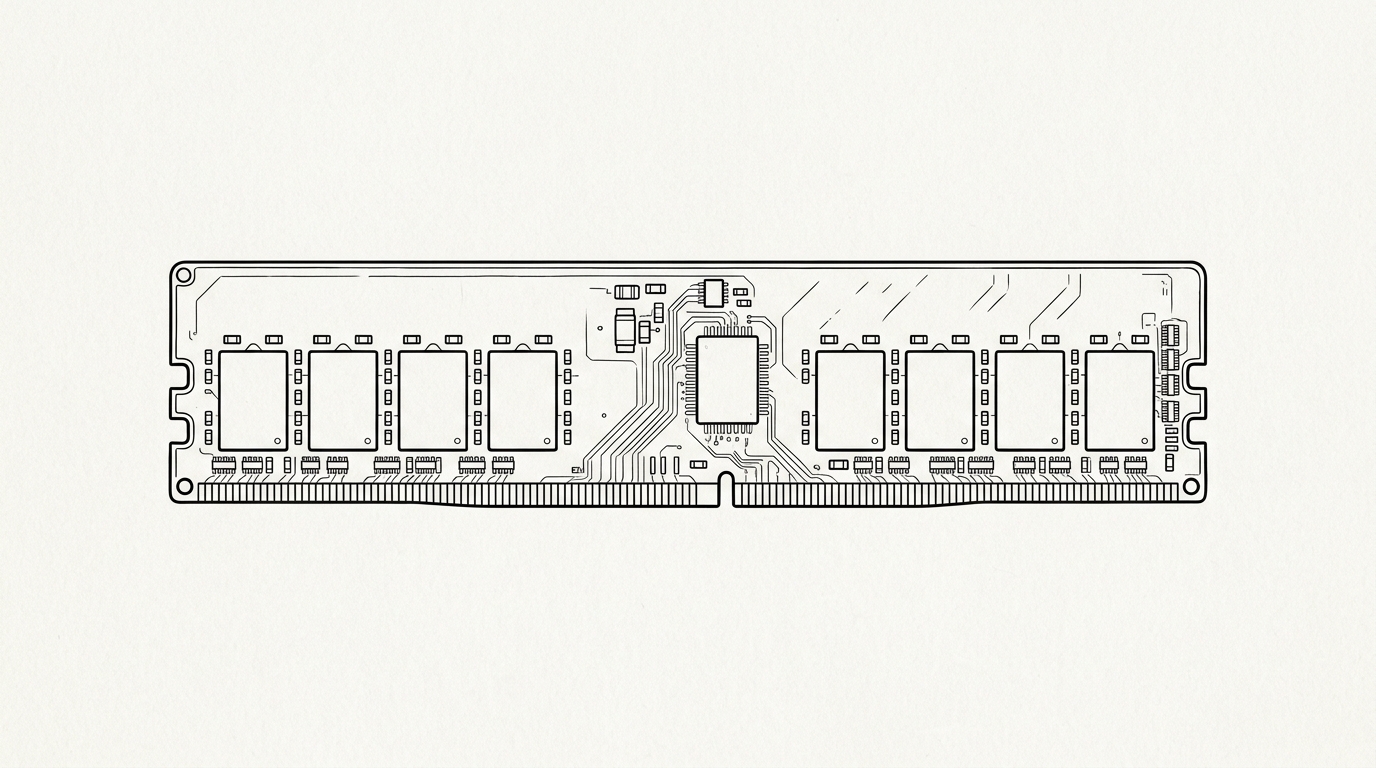

DDR5 RAM (Double Data Rate 5 Synchronous Dynamic Random-Access Memory) is the current generation of system memory, offering double the bandwidth, higher density, and improved power efficiency compared to DDR4. It is paired with Intel Alder Lake and newer and AMD Zen 4 (AM5) and newer CPUs.
How it works
DDR5 uses a 32-bit channel per 64-bit DIMM (versus DDR4’s single 64-bit channel), enabling two independent sub-channels for improved latency on mixed workloads. DDR5 also implements on-die ECC (error correction) at the DRAM level, improving data integrity independent of the motherboard’s ECC support.
Key facts
- Base bandwidth: DDR5-4800 provides 38.4 GB/s per channel versus DDR4-3200’s 25.6 GB/s
- Higher latency initially: DDR5’s CAS latency in nanoseconds is higher than mature DDR4, partially offsetting raw bandwidth gains in latency-sensitive workloads
- Capacity scaling: DDR5 DIMMs support higher per-stick densities, with 64GB and 128GB DIMMs becoming common
For builders
For APU-based mini PCs and workstations, DDR5 bandwidth is critical because the integrated GPU draws from the same memory pool as the CPU. High-bandwidth LPDDR5X variants in mobile APUs directly impact GPU performance for compute and AI inference tasks.
Sources
- Intel. ARK product specifications database. intel.com
- AMD. Processor specifications database. amd.com
- JEDEC. JESD79-5: DDR5 SDRAM standard. jedec.org
- PCI-SIG. PCI Express specifications. pcisig.com
- ServeTheHome. Hardware testing and reviews. servethehome.com
