AI Coding Assistant
AI Coding Assistant is a category of developer productivity tool that integrates a code-specialized language model into the software development workflow to suggest completions, generate functions, explain existing code, refactor for readability, and identify bugs; Coding assistants send the current file, surrounding context, open files, and sometimes repository-level metadata as a prompt to a code-optimized LLM; Teams evaluating AI coding assistants should benchmark on tasks representative of their own codebase, language stack, and complexity level rather than relying solely on HumanEval or SWE-Bench scores
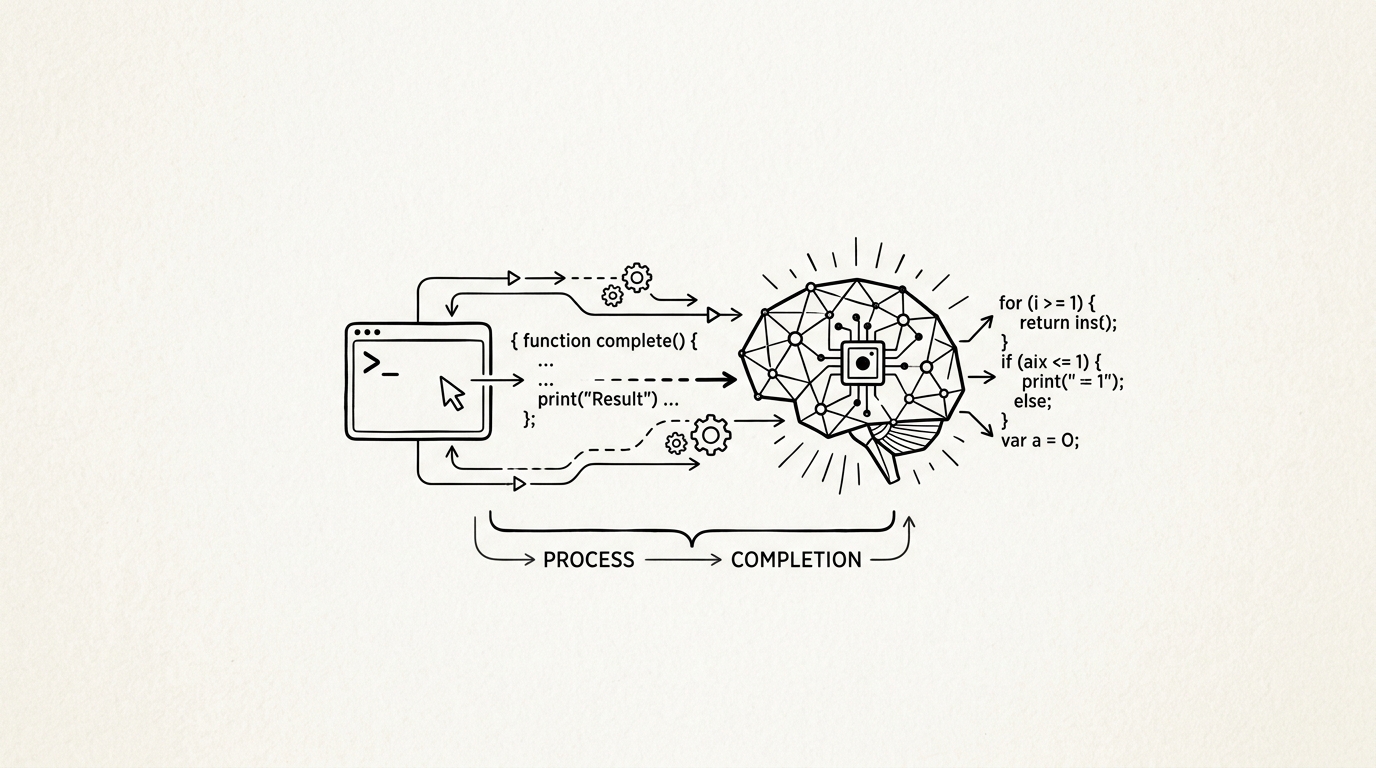

AI Coding Assistant is a category of developer productivity tool that integrates a code-specialized language model into the software development workflow to suggest completions, generate functions, explain existing code, refactor for readability, and identify bugs. These assistants operate inline within editors or as chat interfaces attached to the codebase.
How it works
Coding assistants send the current file, surrounding context, open files, and sometimes repository-level metadata as a prompt to a code-optimized LLM. The model returns suggested completions, explanations, or diffs. More advanced agentic assistants like Claude Code can read the file system, execute code, run tests, and make multi-file edits autonomously within a bounded workspace.
Key facts
- Leading products: GitHub Copilot, Cursor, Claude Code, Windsurf, and Amazon Q Developer are widely adopted.
- Underlying models: Most assistants use frontier models (GPT-4o, Claude, Gemini) or code-specialized derivatives.
- Context strategies: Assistants use tree-sitter parsing, embeddings, and retrieval to include relevant code beyond the open file.
- Productivity studies: GitHub’s research reported a 55 percent speed increase on coding tasks; enterprise adoption has been rapid since 2023.
For builders
Teams evaluating AI coding assistants should benchmark on tasks representative of their own codebase, language stack, and complexity level rather than relying solely on HumanEval or SWE-Bench scores. Privacy considerations matter: some assistants send code to external providers; others offer self-hosted or on-premises options for codebases with IP or compliance restrictions.
Sources
- Chen, M., et al. (2021). Evaluating Large Language Models Trained on Code (Codex / HumanEval). arXiv:2107.03374. arxiv.org
- Roziere, B., et al. (2023). Code Llama: Open Foundation Models for Code. arXiv:2308.12950. arxiv.org
- Jimenez, C., et al. (2023). SWE-bench. arXiv:2310.06770. arxiv.org
- GitHub. (2023). The economic impact of the AI-powered developer lifecycle. github.blog
- Anthropic. Research on coding agents. anthropic.com
