Physical SIM vs eSIM
Physical SIM vs eSIM is the comparison between the traditional removable SIM card form factor and the programmable embedded SIM standard; Physical SIMs store carrier credentials in a dedicated secure element chip housed in a removable card, manufactured by the carrier and distributed through retail or mail channels; Physical SIMs remain the better option in a handful of markets where eSIM MVNO coverage is limited or where local carriers offer genuinely superior rates unavailable to eSIM providers
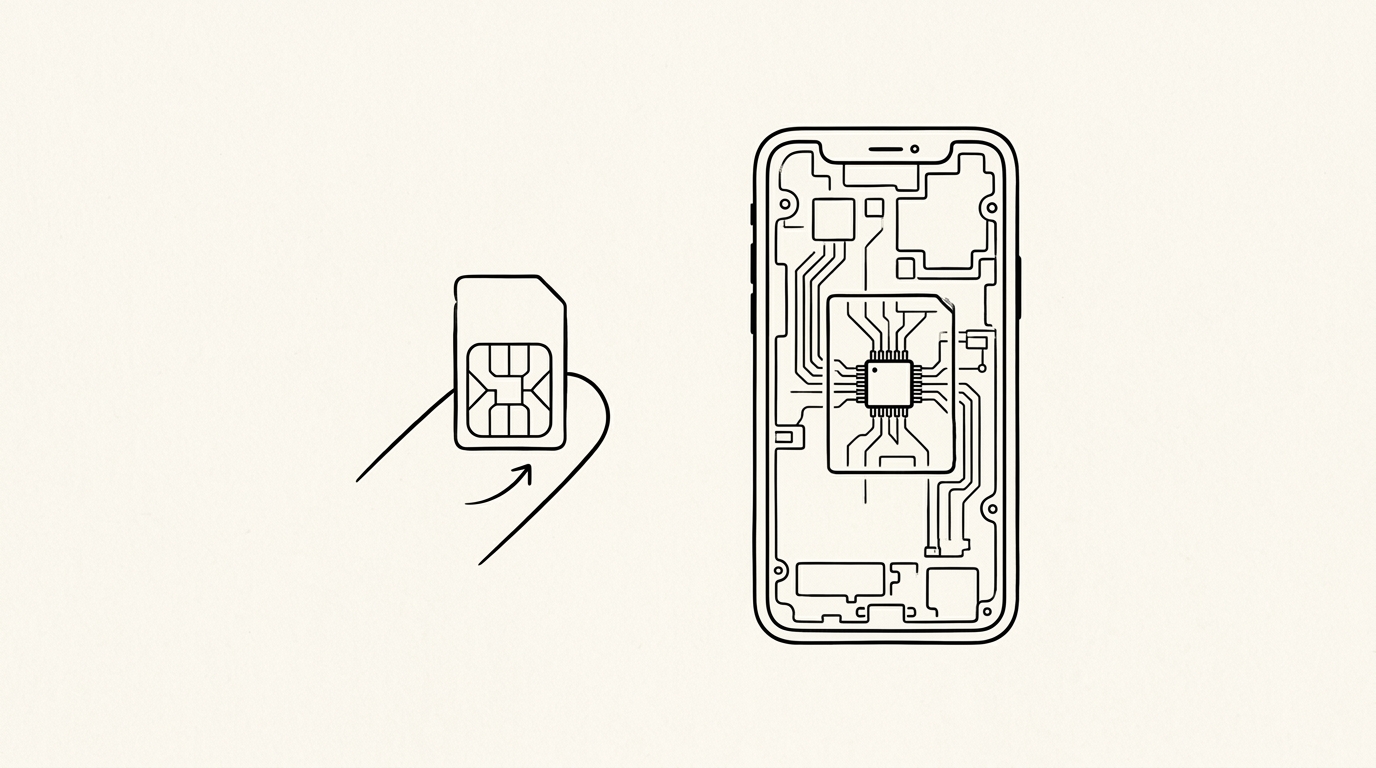

Physical SIM vs eSIM is the comparison between the traditional removable SIM card form factor and the programmable embedded SIM standard. A physical SIM (available in nano, micro, and full-size form factors) requires physically opening the device, removing the current card, and inserting a new one to change carriers. An eSIM achieves the same carrier switch through a software download, taking seconds instead of minutes and requiring no physical manipulation of the device. Both ultimately perform the same network authentication function; the difference is entirely in how the carrier profile is delivered and stored.
How it works
Physical SIMs store carrier credentials in a dedicated secure element chip housed in a removable card, manufactured by the carrier and distributed through retail or mail channels. eSIMs store the same credentials in an equivalent secure element that is soldered to the device motherboard, with carrier profiles delivered remotely via the SM-DP+ protocol. For travelers, the practical difference is that physical SIMs require advance planning (buying a local SIM at a shop or ordering online), while eSIMs can be purchased and activated moments before or after landing.
Key facts
- Coverage advantage of physical SIM: In some markets, physical SIM kiosks in airports offer network options not available via any eSIM provider
- eSIM advantage: No risk of losing a tiny plastic card, no need to store a SIM ejector tool, and no tray damage from repeated swaps
- Hybrid devices: Many phones support one physical SIM slot plus one eSIM, giving travelers the option to use whichever is more practical for the destination
For builders
Physical SIMs remain the better option in a handful of markets where eSIM MVNO coverage is limited or where local carriers offer genuinely superior rates unavailable to eSIM providers. Japan and some parts of Africa are examples where physical SIM plans from local operators can outperform eSIM options. The practical workflow for experienced travel builders is to default to eSIM and carry a SIM ejector tool as insurance for the rare case where a local physical SIM is clearly superior.
Sources
- GSMA. eSIM specifications (SGP.21, SGP.22) for consumer Remote SIM Provisioning. gsma.com
- GSMA. The State of the eSIM Market whitepaper. gsma.com
- ITU. Recommendation E.118: International telecommunication charge card / ICCID structure. itu.int
- 3GPP. Mobile network specifications portal. 3gpp.org
- FCC. Consumer guides on wireless devices and unlocking. fcc.gov
