eSIM Top-Up
eSIM Top-Up is a supplemental data purchase that extends or restores a traveler's mobile data connectivity without requiring a new eSIM profile installation; When a subscriber purchases a top-up, the provider's billing system updates the subscriber's entitlement record and instructs the PCRF to apply a new or modified policy to the active bearer; The top-up bootstrapping problem is a real operational risk: if data is completely exhausted, purchasing a top-up requires connectivity that no longer exists
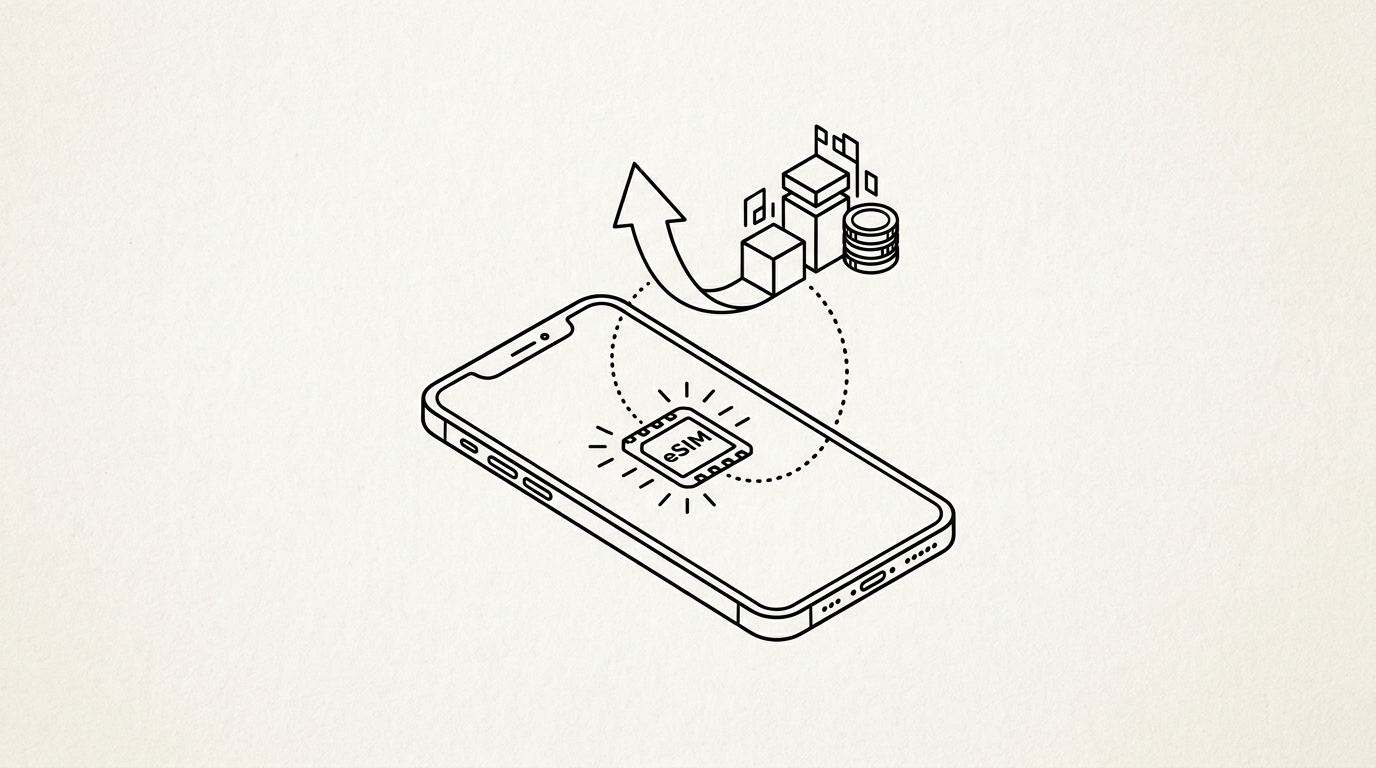

eSIM Top-Up is a supplemental data purchase that extends or restores a traveler’s mobile data connectivity without requiring a new eSIM profile installation. Top-ups are typically sold through the same provider’s app or website and credit additional high-speed data to the existing plan. The mechanism varies by provider: some add gigabytes to the same pool, others extend the plan validity period, and some reset the FUP counter rather than adding raw data.
How it works
When a subscriber purchases a top-up, the provider’s billing system updates the subscriber’s entitlement record and instructs the PCRF to apply a new or modified policy to the active bearer. In most implementations this happens within seconds to a few minutes. If the plan was hard-capped and data was suspended, the restoration of the bearer may require the device to drop and re-establish the data connection (toggling airplane mode typically forces this reconnection).
Key facts
- Cost efficiency: Top-ups almost always have a higher per-GB cost than buying a correctly sized plan upfront; they are a convenience premium, not a savings strategy
- Provider app requirement: Most top-ups require access to the provider’s app or website, which needs an internet connection, creating a bootstrapping problem if data is fully exhausted
- Alternative: Having a second eSIM profile from a different provider already installed avoids the top-up dependency and provides immediate failover
For builders
The top-up bootstrapping problem is a real operational risk: if data is completely exhausted, purchasing a top-up requires connectivity that no longer exists. The solutions are to monitor usage and top up before reaching zero, use hotel or cafe Wi-Fi for the top-up purchase, or use the home carrier’s roaming as a temporary bridge. Builders who routinely exceed their eSIM data budgets should simply buy larger plans upfront rather than relying on top-ups.
Sources
- GSMA. eSIM specifications (SGP.21, SGP.22) for consumer Remote SIM Provisioning. gsma.com
- GSMA. The State of the eSIM Market whitepaper. gsma.com
- ITU. Recommendation E.118: International telecommunication charge card / ICCID structure. itu.int
- 3GPP. Mobile network specifications portal. 3gpp.org
- FCC. Consumer guides on wireless devices and unlocking. fcc.gov
