ACH Transfer
ACH (Automated Clearing House) transfer is a batch-based electronic funds transfer system operated by Nacha that moves money between US bank accounts without using card networks or wire infrastructure; ACH transactions are initiated as either a credit (push: sender instructs their bank to send funds) or a debit (pull: recipient instructs their bank to collect funds from the payer's account); SaaS operators rely on ACH for subscription billing (via Stripe ACH or Plaid-powered flows), paying contractors, and running payroll
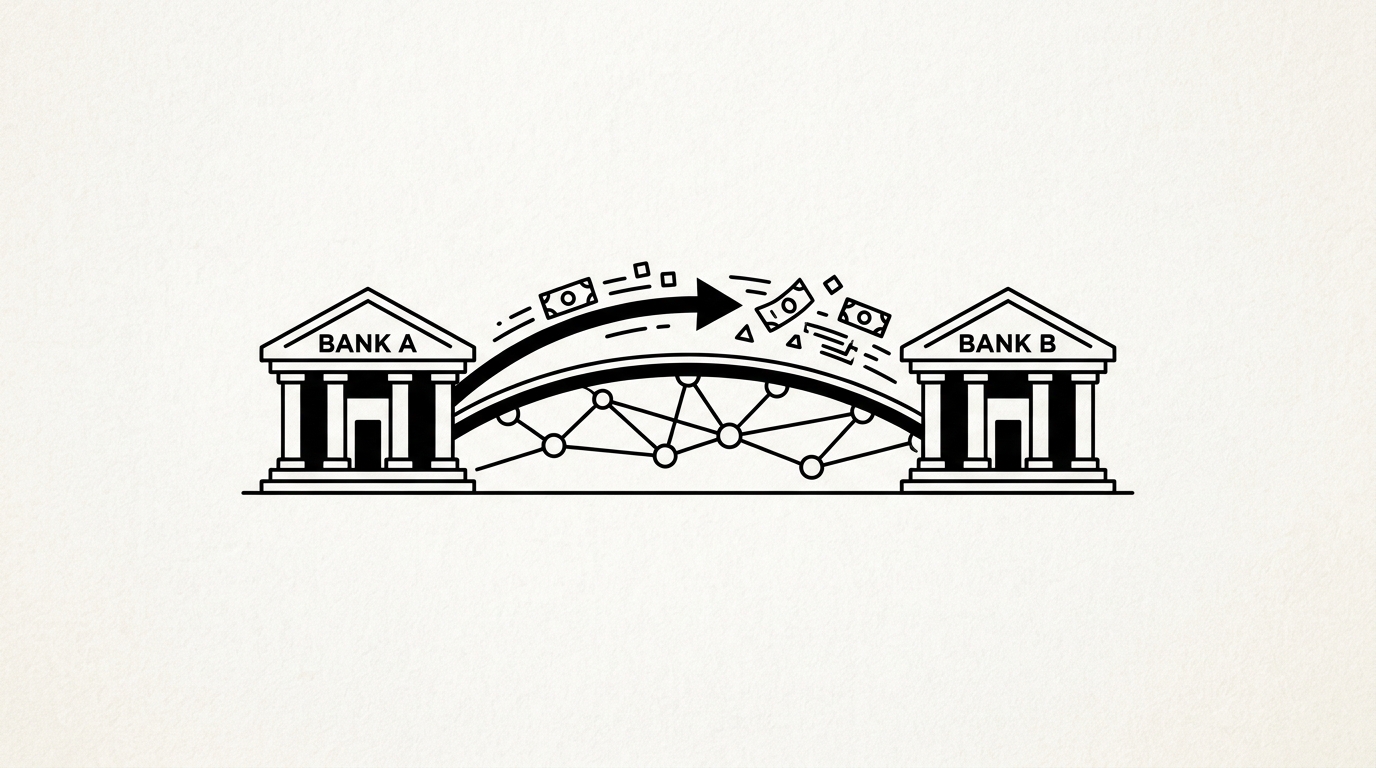

ACH (Automated Clearing House) transfer is a batch-based electronic funds transfer system operated by Nacha that moves money between US bank accounts without using card networks or wire infrastructure. It underpins most recurring payment flows in the American financial system, including direct deposit of paychecks, bill autopay, and B2B vendor payments. ACH is distinguished from wire transfers by its batch processing model, lower cost, and next-day or same-day settlement windows.
How it works
ACH transactions are initiated as either a credit (push: sender instructs their bank to send funds) or a debit (pull: recipient instructs their bank to collect funds from the payer’s account). Transactions are batched and submitted to an ACH operator (the Federal Reserve or EPN) multiple times per day, then routed to the receiving bank. Standard ACH settles in 1-2 business days, while Same-Day ACH (available since 2016) settles within the same business day for an additional fee.
Key facts
- Cost: ACH transfers typically cost $0.20 to $1.50 per transaction, far cheaper than domestic wire transfers at $15 to $35.
- Reversibility: ACH debits can be reversed within 5 business days for reasons like unauthorized transactions, unlike wire transfers which are typically final.
- Nacha limits: Same-Day ACH transactions are capped at $1 million per transaction as of 2022.
For builders
SaaS operators rely on ACH for subscription billing (via Stripe ACH or Plaid-powered flows), paying contractors, and running payroll. ACH failure rates tend to be higher than card payments because bank account balances are not verified in real time, so building retry logic and bank account verification steps into billing flows is important. For high-volume B2B payment workflows, ACH is almost always the preferred rail due to cost savings at scale.
Sources
- FDIC. Deposit insurance coverage rules and limits. fdic.gov
- Federal Reserve. Payment systems policy and supervision. federalreserve.gov
- Nacha. ACH Network Rules. nacha.org
- OCC. Payments supervision and guidance. occ.gov
- CFPB. Consumer financial protection research and reports. consumerfinance.gov
